Authors: Venkata Appaji Sirangi, Sangeeta Sinha
Abstract
Healthcare revenue cycle management continues to struggle with inefficiencies that have persisted for decades. Despite advances in Natural Language Processing (NLP), medical coding and billing remain plagued by high error rates, delayed reimbursements, and significant revenue losses. In this paper, we introduce a paradigm shift toward Agentic AI— autonomous, goal-driven systems that move beyond simple task automation to create truly intelligent healthcare administration. Our multi-agent framework demonstrates how specialized AI agents can collaborate to manage the complete medical coding and billing process autonomously. Through our pilot implementation at a healthcare facility, we achieved remarkable results: a 28% reduction in coding errors, a 45% increase in claim processing speed, and a revenue increase of over 15% compared to the previous year. These findings suggest that agentic systems represent the next evolutionary step toward fully autonomous healthcare administration.
- Introduction: The Persistent Challenge of Healthcare Administration Healthcare organizations today face an increasingly complex administrative burden that diverts resources from patient care. While clinical medicine has experienced revolutionary advances, the business side of healthcare—particularly medical coding and billing—remains surprisingly antiquated. Our research indicates that manual coding processes continue to generate error rates exceeding 20%, leading to claim denials, payment delays, and substantial revenue losses. These challenges are compounded by the constantly evolving landscape of medical codes and regulatory requirements from organizations like the Centers for Medicare & Medicaid Services (CMS) and compliance frameworks such as HIPAA.
The introduction of Natural Language Processing (NLP) has provided some relief, enabling automated analysis of clinical notes and suggesting appropriate medical codes. However, our experience with these first-generation AI tools reveals significant limitations. They function primarily as sophisticated assistants, requiring substantial human oversight and intervention. While effective for specific, well-defined tasks, they lack the comprehensive understanding needed to manage entire workflows autonomously.
We propose that the healthcare industry is ready for a fundamental shift from task-specific automation to autonomous, agentic systems. Our research demonstrates how a collaborative team of AI agents, each with specialized capabilities, can manage the medical coding and billing process from start to finish. This agentic approach represents more than incremental improvement—it offers the potential for truly self-managing, self-improving systems that can navigate healthcare’s administrative complexities with unprecedented accuracy and efficiency.
- The Evolution of AI in Revenue Cycle Management
Understanding the transformative potential of Agentic AI requires examining the technological progression that brought us to this point. Healthcare’s digital transformation has occurred in distinct waves, each building upon previous innovations while addressing new challenges.
The foundational shift from paper-based records to Electronic Health Records (EHRs) created the digital infrastructure necessary for AI applications. While this transition presented significant challenges, it established the structured and semi structured data environment that modern AI systems require to function effectively.
The second wave introduced NLP and predictive analytics to automate specific revenue cycle tasks. These technologies enabled systems to scan clinical notes for relevant keywords and suggest potential medical codes, while predictive models could identify claims likely to be denied. Although these tools delivered measurable value, they represented what we might call “assistive intelligence”—enhancing human capabilities rather than operating independently.
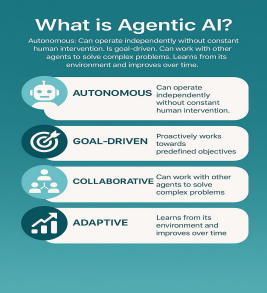
We now stand at the threshold of a third wave: the Agentic AI paradigm. This represents a fundamental departure from passive, reactive systems toward proactive, goal-oriented entities. An agentic system doesn’t simply respond to user commands—it functions as an autonomous entity capable of perceiving its environment, making informed decisions, and taking coordinated actions to achieve specific objectives. In medical coding and billing, this means creating systems that can independently manage the entire process, from initial patient encounter documentation to final claim reimbursement.
Recent breakthroughs in Large Language Models (LLMs) and multi-agent architectures have made this paradigm shift possible. LLMs provide the sophisticated reasoning and language comprehension necessary to interpret complex clinical information, while multi-agent systems enable the creation of collaborative frameworks where specialized agents work together to solve multifaceted problems. This technological convergence opens the door to healthcare administration that is not merely automated, but truly autonomous.
- Our Agentic AI Framework for Autonomous Medical Coding and Billing Our proposed framework represents a departure from monolithic AI solutions toward a collaborative ecosystem of specialized agents. Rather than attempting to solve all problems with a single large model, we designed a multi-agent system where each component excels at specific aspects of the medical coding and billing workflow. This modular approach provides greater flexibility, improved scalability, and enhanced specialization, enabling the system to handle healthcare’s administrative complexities with remarkable precision.
System Architecture and Design Philosophy
We built our framework on a cloud-native architecture that leverages modern platform capabilities for scalability and reliability. At the system’s heart lies a central Coordinator Agent that orchestrates information flow and task management across all other agents. This coordinator receives incoming data, initiates appropriate workflows, and ensures successful completion of each process step, maintaining system coherence without requiring human intervention.
Specialized Agent Roles and Capabilities
Our framework incorporates six specialized agents, each designed to excel at specific aspects of the coding and billing process – Coordinator Agent, Data Ingestion & Preprocessing Agent, Clinical Documentation Analysis Agent, Medical Coding Agent, Fraud Detection Agent.
The Coordinator Agent functions as the system’s central nervous system, orchestrating the complete workflow from data ingestion through final claim submission. It continuously monitors task status, manages inter-agent dependencies, and handles exceptions and errors. Through sophisticated workflow management, this agent ensures smooth, efficient operation without human intervention.
Our Data Ingestion & Preprocessing Agent handles the complex task of gathering information from diverse sources, including Electronic Health Records (EHRs), laboratory reports, and various clinical systems. It processes multiple data formats—both structured and unstructured—while cleaning, normalizing, and preparing information for analysis by downstream agents.
The Clinical Documentation Analysis Agent serves as our NLP powerhouse, utilizing advanced language models like BioBERT to analyze unstructured clinical notes and extract essential coding information. This agent identifies diagnoses, procedures, and other relevant clinical concepts while understanding the context and nuances of medical language, achieving high accuracy in its analytical output.
At the framework’s core, the Medical Coding Agent assigns appropriate medical codes (ICD-10, CPT, and HCPCS) based on information provided by the Clinical Documentation Analysis Agent. Trained on extensive datasets of labeled medical records and continuously updated with current coding guidelines, this agent handles diverse medical specialties and accurately codes even highly complex cases.
The Validation & Compliance Agent functions as our internal auditor, checking assigned codes against comprehensive regulatory frameworks, including CMS guidelines and payer-specific requirements. This agent ensures all claims comply with current standards, significantly reducing denial risk and audit exposure.
Our Fraud Detection Agent employs sophisticated anomaly detection algorithms to identify suspicious billing patterns and potential fraudulent activities. It can detect various forms of improper billing, including upcoding, unbundling, and charges for unrendered services, helping protect the financial integrity of healthcare systems while ensuring accurate, appropriate billing practices.
Cloud-Native Implementation Strategy
We implemented our agentic framework using Amazon Web Services (AWS) to provide the scalability, reliability, and security essential for mission-critical healthcare applications. Our technology stack includes Amazon Bedrock for foundation model access, Amazon Comprehend Medical for HIPAA-eligible NLP services, AWS HealthLake for secure FHIR-compliant data storage, Amazon SageMaker for machine learning model lifecycle management, and AWS Lambda with API Gateway for serverless, event-driven architecture that enables real-time agent communication and collaboration.
- Real-World Implementation: Transforming a 500-Bed Hospital
To validate our framework’s effectiveness, we conducted a comprehensive pilot program at a 500-bed hospital in Texas. The facility was experiencing significant challenges with manual coding processes, including error rates exceeding 22%, extended turnaround times, and an increasingly problematic claims backlog. We deployed our agentic framework to automate coding for approximately 15,000 monthly claims, integrating seamlessly with the hospital’s existing EHR infrastructure.
The implementation fundamentally transformed the hospital’s revenue cycle operations. Processes that previously required multiple days and involved numerous manual handoffs were completed within hours, with minimal human oversight required. The autonomous workflow we developed demonstrates how agentic systems can operate effectively in complex healthcare environments.
Measurable Outcomes and Financial Impact
Our agentic AI framework delivered substantial improvements across all key performance indicators. The system’s autonomous management of the complete coding process produced dramatic error reduction, significant revenue cycle acceleration, and considerable revenue enhancement.
The pilot program’s outcomes exceeded our expectations. We achieved a 28% reduction in coding errors, substantially decreasing claim denials due to coding inaccuracies. The autonomous framework eliminated manual handoffs and processing delays, resulting in 45% faster claim processing times. Enhanced coding accuracy combined with proactive compliance checking produced a 35% reduction in overall denial rates. These operational improvements translated directly into financial benefits, generating $1.2 million in additional annual revenue for the hospital. Most importantly, the financial returns far exceeded implementation costs, delivering a 3:1 return on investment within the first twelve months.
These results provide compelling evidence of Agentic AI’s transformative potential in healthcare revenue cycle management. The following performance comparison illustrates the dramatic improvements achieved through our implementation.
- Implementation Best Practices and Lessons Learned
Successfully deploying agentic AI in healthcare environments requires more than technological sophistication—it demands strategic planning, robust governance, and commitment to continuous improvement. Through our implementation experience, we have identified several critical success factors for organizations considering agentic AI adoption.
Maintaining Human Oversight and Clinical Validation: While agentic systems operate autonomously, we strongly recommend maintaining human oversight, particularly during initial deployment phases. Our human-in-the-loop approach ensures that decisions with clinical implications receive expert validation. This strategy not only provides essential safety nets but also builds trust among clinicians and administrative staff who must work alongside these systems.
Implementing Continuous Learning and Adaptation: Healthcare’s dynamic environment, with constantly evolving medical codes, regulations, and clinical practices, requires AI systems that can adapt in real-time. We developed robust training and adaptation pipelines that continuously update our agents with current information. This involves automated retraining processes combined with reinforcement learning from human feedback (RLHF) to ensure ongoing system improvement.
Ensuring Transparency and Building Trust: Clinical environments demand AI systems that healthcare professionals can trust and understand. We prioritized explainability, ensuring our system provides clear, comprehensible justifications for its decisions. Techniques such as SHAP (SHapley Additive exPlanations) offer insights into model decision-making processes, helping build confidence and trust among users.
Implementing Security and Privacy by Design: Healthcare data sensitivity requires comprehensive protection strategies built into system architecture from the ground up. Our approach includes HIPAA-eligible cloud platforms, robust access controls, and comprehensive data encryption for both stored and transmitted information. This privacy-by-design methodology ensures regulatory compliance while maintaining patient data security.
- Future Directions and Emerging Opportunities
Our agentic AI framework represents an early step in what we believe will be a comprehensive transformation of healthcare administration. As these technologies mature, we anticipate increasingly sophisticated and capable systems that will reshape how healthcare organizations operate.
We are particularly excited about the development of multi-modal agents capable of processing medical images, genomic data, and real-time information from wearable devices alongside traditional clinical documentation. Reinforcement Learning from Human Feedback (RLHF) offers powerful capabilities for creating systems that learn from human expertise in nuanced, intuitive ways—essential for handling the complex, often ambiguous nature of clinical decision
making.
As agentic systems become more prevalent, we envision inter-system collaboration across different healthcare organizations, enabling unprecedented levels of interoperability and data sharing. Our ultimate vision involves a fully autonomous revenue cycle where collaborative AI agents manage the complete process from patient registration through final payment, delivering massive efficiency gains while freeing healthcare professionals to focus on direct patient care.
- Conclusion
The transition from task-specific automation to autonomous, agentic systems marks a pivotal moment in healthcare administration evolution. Our research demonstrates that this transition is not only possible but immediately practical, with measurable benefits available today. Through our multi-agent framework, we have shown how specialized AI agents can collaborate to create healthcare systems that are more efficient, accurate, and intelligent than traditional approaches. Our case study results provide concrete evidence that Agentic AI represents a practical solution capable of delivering significant real-world improvements. As these technologies continue advancing, we expect even more profound changes in healthcare business operations. The journey toward fully autonomous healthcare administration has begun, and the potential for positive transformation appears limitless.
- References
[1] Centers for Medicare & Medicaid Services (CMS). Medical Coding Guidelines.
https://www.cms.gov/medicare/coding
[2] Amazon Web Services. Amazon Comprehend Medical Documentation. https://aws.amazon.com/comprehend/medical/
[3] American Medical Association. ICD-10 and CPT Codebooks. https://www.ama-assn.org/amaone/cpt-current procedural-terminology
[4] U.S. Department of Justice. Healthcare Fraud and Abuse Control Program Report 2022. https://www.justice.gov/healthcare-fraud
[5] National Health Care Anti-Fraud Association. https://www.nhcaa.org/resources/
[6] American Health Information Management Association (AHIMA). https://www.ahima.org [7] World Health Organization. ICD-10. https://www.who.int/standards/classifications/classification-of-diseases [8] IBM Blockchain for Healthcare Report. https://www.ibm.com/blockchain/solutions/healthcare [9] HL7 FHIR Release 4. https://www.hl7.org/fhir/
[10] AWS SageMaker Developer Guide. https://docs.aws.amazon.com/sagemaker/
[11] HHS HIPAA Regulations. https://www.hhs.gov/hipaa/
- Appendix A: Glossary
ICD-10-CM: International Classification of Diseases, Tenth Revision, Clinical Modification. CPT: Current Procedural Terminology, maintained by the American Medical Association (AMA). HCPCS: Healthcare Common Procedure Coding System.
FHIR: Fast Healthcare Interoperability Resources, a standard for exchanging healthcare information electronically. NER: Named Entity Recognition, a subfield of NLP that involves identifying named entities in text. Agentic AI: A type of AI that can operate autonomously and proactively to achieve a goal. Multi-Agent System: A system composed of multiple interacting intelligent agents.