By Ella Shank 2-17-25
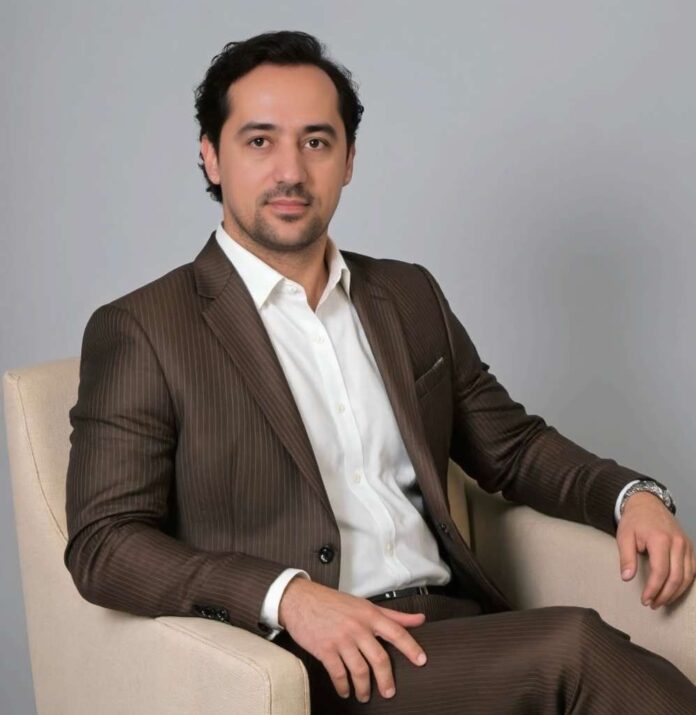
When Shukhrat Safarov arrived in the United States, he brought with him more than just a suitcase and a dream—he carried a vision to reimagine how Americans move. Today, as the founder and CEO of iZZi Ride, a carpooling platform that, as of early 2025, has already attracted nearly 10,000 users, Safarov is helping reshape the landscape of urban mobility in the United States.
Born in 1991 in Dushanbe, Tajikistan, Shukhrat Safarov came of age during the uncertain years that followed his country’s civil war. He credits his parents, a doctor and an entrepreneur, for instilling in him the values of education, resilience, and service. These values guided him through rigorous academic training that included a bachelor’s degree in Economics from Russian-Tajik (Slavonic) University and a master’s degree in International Finance and Banking from the Financial University under the Government of the Russian Federation.
While studying in Moscow, Safarov launched his first successful venture—an import business connecting Central Asian cotton suppliers with Russian manufacturers. This early taste of entrepreneurship, paired with an academic internship at Gazprombank in Zurich, set the tone for a globally oriented career.
His most influential academic achievement came during his PhD research in public-private partnerships (PPP). His novel methodology, “Novizna,” was adopted by the Ministry of Finance of Tajikistan and incorporated into the national tax code—a rare feat for a doctoral student. The work explored PPP as a strategic alternative to privatization and nationalization in developing economies, highlighting Safarov’s vision for inclusive and balanced economic growth.
But it is in the United States where Safarov has made his most tangible impact. In 2024, he launched iZZi Ride, a mobile application designed to connect drivers and passengers traveling between cities. Unlike traditional ride-sharing apps focused on urban short-hauls, iZZi Ride targets intercity travel—an area with growing demand, especially as Americans increasingly prioritize cost savings and sustainability.
“The U.S. has a powerful car culture,” Safarov says. “But with rising fuel costs and a renewed push for climate action, people are looking for smarter ways to get around. iZZi Ride is a simple, scalable solution to reduce emissions, cut travel costs, and build community.”
As of early 2025, the app’s numbers speak for themselves. With nearly 10,000 users and an impressive 4.8-star rating on the App Store, iZZi Ride has already carved out a niche in a competitive market. Its success reflects not only solid product design but also Safarov’s understanding of both American consumer behavior and public-sector priorities.
Sustainability is at the heart of iZZi Ride’s mission. According to the U.S. Environmental Protection Agency, transportation accounts for approximately 29% of total greenhouse gas emissions in the United States. Carpooling is one of the most effective ways to reduce the number of vehicles on the road. By focusing on longer intercity trips, iZZi Ride achieves higher emissions savings per shared ride compared to intra-city services.
The app’s growth also dovetails with government priorities. Many U.S. municipalities and states are investing in multi-modal transportation systems, and apps like iZZi Ride offer a cost-effective complement to buses and rail. Moreover, local governments are beginning to offer incentives for carpoolers, such as toll discounts and dedicated highway lanes—policy trends that Safarov hopes to align with through future public-private partnerships.
His efforts have not gone unnoticed. In addition to receiving media coverage in Central Asia, Safarov has been recognized by local business organizations in Pennsylvania, where he now resides. His work has also drawn the interest of environmental advocacy groups and transportation planners exploring community-based mobility solutions.
Looking ahead to mid-2025 and beyond, Safarov plans to expand iZZi Ride beyond the East Coast and to introduce new features such as integrated ride scheduling with public transit and carbon footprint tracking for users. He is also exploring partnerships with universities, logistics companies, and government agencies to scale adoption.
“America gave me the opportunity to build something meaningful,” he says. “I want to give back by making our transportation cleaner, smarter, and more connected.”
Safarov’s story is not just about entrepreneurial success; it’s a testament to the power of cross-border experience and the belief that innovation can start anywhere—even in a post-conflict corner of Central Asia. Through iZZi Ride, he is not only creating a business but contributing to a national conversation on mobility, climate, and community.