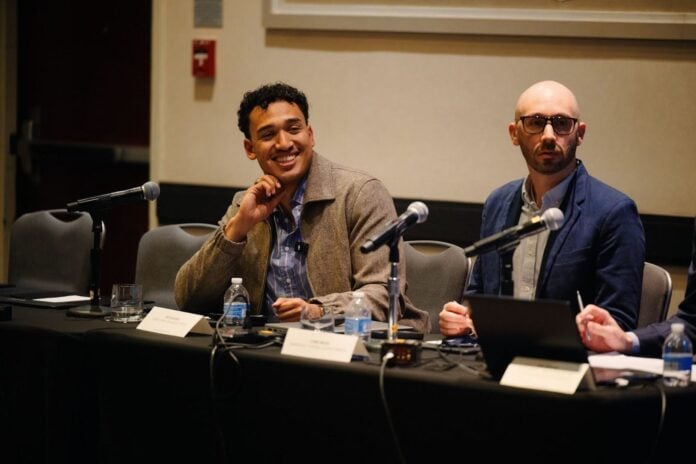
Skye Blanks occupies an unusual position in the business world. As a startup mentor at Yale University’s Tsai Center for Innovative Thinking, he works with some of the brightest emerging entrepreneurs in academia. As founder of Herman Todd Consulting Group (HTCG), he advises working business owners navigating real-world constraints. The gap between these environments reveals important lessons about entrepreneurship, innovation, and what actually drives business success.
Academic entrepreneurship programs typically emphasize innovation, disruption, and moonshot thinking. Students are encouraged to tackle large problems with novel solutions, to think big and move fast. This approach produces exciting pitches and occasionally transforms industries. It also creates unrealistic expectations about how most businesses actually succeed.
Working entrepreneurs, by contrast, typically focus on execution, sustainability, and incremental improvement. They operate in markets with established competitors, manage cash flow constraints, and must be profitable relatively quickly. Innovation matters, but so does discipline, consistency, and understanding fundamentals.
Blanks bridges these worlds, bringing academic innovation principles to practical business contexts while grounding student entrepreneurs in operational realities. The synthesis offers insights for both groups.
What Entrepreneurs Can Learn from Academic Innovation
Academic entrepreneurship excels at questioning assumptions. Students, unburdened by industry experience, ask “why?” about practices that working professionals accept as given. Why must customers purchase this way? Why does this process take so long? Why is this industry structured like this?
This naiveté can be powerful. Many successful innovations come from outsiders who do not know what is “impossible.” They attempt things experienced professionals have already dismissed, sometimes succeeding because they approach problems differently.
Blanks encourages his consulting clients to adopt this questioning mindset. Even established businesses benefit from periodically examining their assumptions. Why do we price this way? Why do we serve these customer segments? Why do we use these channels? Often, current practices reflect historical decisions that no longer make sense.
Academic environments also excel at interdisciplinary thinking. Students draw connections between fields, applying insights from one domain to problems in another. This cross-pollination generates novel approaches that pure specialists might miss.
Working businesses tend toward specialization. Everyone focuses on their functional area with limited visibility into how pieces fit together. Blanks advocates for more holistic thinking, especially among leaders. Understanding how marketing, operations, finance, and customer service interconnect reveals opportunities that siloed thinking misses.
Finally, academic programs emphasize research and evidence-based decision-making. Before launching, students analyze markets, study competitors, and test assumptions. This disciplined approach contrasts with many working entrepreneurs who rely heavily on intuition or implement strategies because “that’s how it’s done.”
Through his work at the International Council for Small Business (ICSB), Blanks has observed this pattern globally. Businesses that combine entrepreneurial energy with analytical rigor tend to outperform those relying solely on either. The art is balancing research with action, analysis with implementation.
What Academic Entrepreneurs Must Learn from Main Street
For all their strengths, academic entrepreneurship programs often underemphasize fundamentals that determine business success. Brilliant ideas fail constantly because founders cannot execute, cannot sell, cannot manage cash flow, or cannot build functional teams.
Blanks works to ground student entrepreneurs in these realities. Innovation matters, but so does bookkeeping. Disruption sounds exciting, but serving customers reliably builds businesses. Thinking big has value, but executing small steps well matters more.
Many academic entrepreneurs struggle with the transition from pitch to operation. They excel at presentations and strategic thinking but find daily business management tedious. The actual work of entrepreneurship, tracking expenses, following up with customers, managing inventory, handling complaints, does not match the glamorous vision.
This disconnect creates challenges that Blanks addresses through mentorship. He helps students understand that entrepreneurial success requires mastering mundane fundamentals, not just generating clever ideas. The businesses that thrive do both: they innovate strategically while executing operationally.
Cash flow discipline represents another area where academic preparation often falls short. Student entrepreneurs think about funding rounds and investor pitches. Working entrepreneurs think about meeting payroll, managing receivables, and timing expenses. Both matter, but the latter determines survival week to week.
Blanks emphasizes this practical financial management through HTCG’s approach. The methodology he uses focuses on real numbers, actual cash flows, and specific profitability levers. This grounds strategic thinking in economic reality, a lesson many academic entrepreneurs learn painfully when their ventures launch.
Synthesizing Academic Innovation and Practical Execution
The most effective entrepreneurs combine academic innovation with operational discipline. They question assumptions while building reliable systems. They think strategically while executing tactically. They innovate where it matters while standardizing where it does not.
This synthesis is what Blanks teaches across both environments. At Yale, he pushes students to think beyond pitches toward actual operations. In consulting, he encourages working entrepreneurs to adopt some academic rigor in analyzing their businesses.
The Knowledge Hubs program at ICSB embodies this synthesis. It creates platforms for sharing insights across contexts, allowing entrepreneurs to learn from academic research while keeping discussions grounded in practical application. Theory informs practice, and practice tests theory.
For working entrepreneurs, the key lesson from academic innovation is not to copy student approaches but to recapture some of that questioning mindset. Challenge your assumptions. Look outside your industry for insights. Use data to test intuitions. Think about problems from first principles occasionally rather than just following established practices.
For academic entrepreneurs, the lesson is that great ideas matter less than great execution. Focus on building businesses that work operationally, not just conceptually. Master fundamentals before attempting disruption. Understand that sustainable success comes from consistent delivery, not just clever innovation.
Building Bridges Between Worlds
Blanks’ work bridging academic and practical entrepreneurship reveals that both communities have much to teach each other. Academic programs benefit from more exposure to operational realities and the discipline required for sustainable business. Working entrepreneurs benefit from academic rigor in analysis and willingness to question assumptions.
The businesses most likely to succeed in competitive markets will be those that combine these strengths. They will innovate thoughtfully while executing reliably. They will question assumptions while respecting fundamentals. They will think big strategically while acting small tactically.
For entrepreneurs at any stage, the path forward involves learning from both traditions. Bring academic rigor to your analysis. Question your assumptions. Look for insights from unexpected places. But also master the fundamentals. Build systems. Manage cash flow. Serve customers reliably.
As Blanks demonstrates through his work spanning Yale’s innovation programs, global business development through ICSB, and hands-on consulting through Herman Todd Consulting Group, the future belongs to entrepreneurs who refuse the false choice between innovation and execution. The best businesses do both, and the best entrepreneurs never stop learning from every available source.