Every organization has a culture, but it may not be the culture described in its mission statement.
Employees experience workplace culture through daily interactions, leadership decisions, communication practices and behavioral expectations. When those experiences conflict with the values an organization publicly promotes, trust begins to erode.
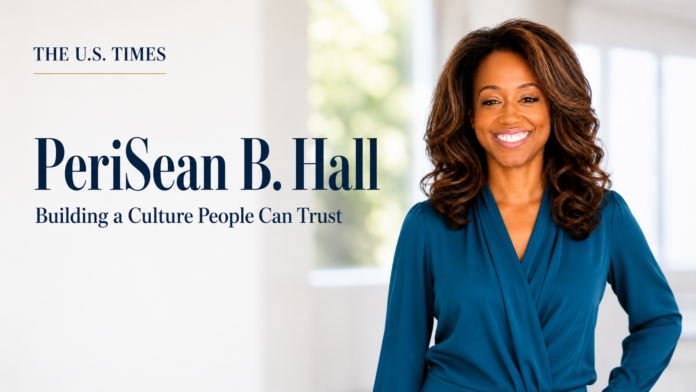
PeriSean B. Hall believes leaders must examine the difference between the culture they claim and the culture their people actually experience.
“Communication dictates conduct, and conduct creates culture,” Hall says.
As a Culture Architect, author, speaker and creator of The Culture Code™ Framework, Hall helps organizations recognize the behaviors and communication patterns shaping their workplace culture. Her approach centers on three foundational elements: Conduct, Clarity and Communication.
Culture Is Created Every Day
Hall’s professional background spans workforce development, media, training, relationship management and organizational communication. Her degree in Radio, Television and Film, with a minor in Sociology, helped her develop an early understanding of communication and human behavior.
Her career has allowed her to work with employees, employers, organizational leaders, job seekers and community partners. Those experiences revealed how differently workplace culture can look depending on where someone sits within an organization.
Executives may believe expectations are clear, while employees receive inconsistent instructions. Leaders may promote transparency, while important information remains unavailable. Organizations may list respect as a core value, while everyday conduct communicates something entirely different.
According to Hall, culture is not created by slogans, posters or polished statements on a website. Culture is created by what leaders model, what organizations reward, what employees experience and what everyone is willing to address.
The Three Elements of The Culture Code™
The Culture Code™ Framework gives organizations a practical way to evaluate their culture.
Conduct examines how people behave, how leaders show up and whether accountability is applied consistently. Clarity focuses on expectations, roles, responsibilities, boundaries and organizational priorities. Communication considers how information is shared, how concerns are addressed and whether conversations build trust or confusion.
The three elements are closely connected. Unclear communication can produce inconsistent conduct. Inconsistent conduct can weaken trust. When trust declines, employee engagement, relationships and performance may also suffer.
Hall’s strength lies in identifying what is happening beneath the surface and giving organizations language for problems that employees often recognize but struggle to explain. She does more than identify cultural gaps. She looks for the missing structure, process or conversation that can help repair them.
Lessons That Began at Home
Hall traces the foundation of her work to lessons she learned from her mother.
Her mother emphasized the importance of conduct, communication, relationships, presentation and how a person shows up in the world. Presentation meant more than appearance. It included how people treated others, handled responsibilities and managed relationships.
Years later, Hall recognized that many organizations struggled with those same principles.
The connection helped shape her work as a builder. When Hall encountered structural or communication problems without having the positional authority to change them, she learned that influence did not always require a title. She created tools, clarified expectations, improved processes and brought structure to places where it was missing.
That ability eventually became intellectual property, training and a growing body of thought leadership.
Closing the Culture Gap
Hall envisions The Culture Code™ becoming a nationally recognized framework used in corporate speaking, leadership development, consulting, organizational assessments and scalable training programs.
Her message is especially relevant for leaders facing communication breakdowns, inconsistent leadership, low trust, accountability concerns or employee disengagement. Healthy workplace culture requires more than the right words. It requires leadership consistency and a willingness to align everyday behavior with stated values.
The most important question is not simply, “What does our organization say about its culture?”
The better question is, “What are our people actually experiencing?”
Organizations ready to explore The Culture Code™ or engage PeriSean B. Hall for speaking, workshops, training or consulting can visit www.theculturecode.com.