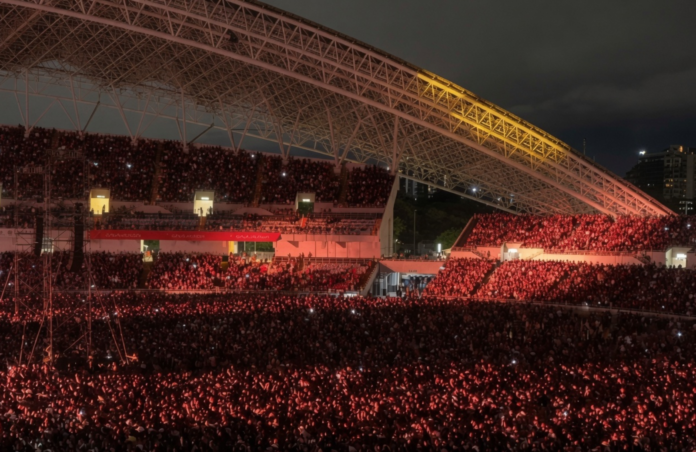
A few years ago, most major touring acts skipped Costa Rica. Now that stadium dates sell out, the promoters behind them are learning something the industry already knows: selling tickets is the easy part. The hard part is everything a full stadium sits on top of.
A Market That Grew Faster Than Its Playbook
For years, the big regional tours flew over Central America on their way to Mexico, Colombia, or Chile. The math has changed. Incomes have risen, tourism keeps growing, and audiences in San José will pay for the same shows people see in Bogotá or Mexico City. Costa Rica earned a spot on the routing sheet. However, the country faced a significant challenge: insufficient local production capacity to meet sudden demand, which affected operational scalability and long-term growth.
That gap decides who lasts. Some promoters see it as an opportunity to build a real company. Others chase one big night, hoping the numbers work out. Pablo Gerboles Parrilla, a Spanish entrepreneur with companies in software, marketing, and live entertainment, falls in the first group. His question about any show is simple: What does this leave behind once the crowd goes home?
The Difference Between Booking a Show and Building a Business
Anyone with money can book an act for one night. Whether there is a business underneath depends on everything around the booking: the ticketing setup, venue relationships, security, vendors, and the financial model that determines whether the date makes sense before a deposit is ever wired.
Through his concert production ventures, Gerboles Parrilla runs live events as an operations problem first. His team staged a sold-out Grupo Firme concert at Estadio Nacional, and the work behind it looked more like logistics than promotion: schedules, contracts, contingency plans, settlement math. ‘Creativity brings ideas to life, but systems make them sustainable,’ he says. In a market this young, that is less a slogan than a way to inspire trust and confidence in long-term success.
Why Operational Systems Decide Which Promoters Survive
Boom markets pull in two kinds of operators. One rushes in to grab the moment. The other builds machinery that keeps producing after the moment cools off. You cannot tell them apart from the poster, and you cannot tell them apart from the first show either, because first shows are messy for everyone. You can tell them apart by the tenth, and by whether the lessons from that first night ever turned into a system.
Gerboles Parrilla picked up that discipline long before he touched entertainment. “Consistency beats intensity. It’s not about one great shot or one big win; it’s about showing up, making calculated moves, and adapting when conditions change.” In practice, at a stadium, consistency means repeatable processes, standard contracts, and a back office that can handle a chaotic load-in without inventing the plan on the spot.
Treating Concerts Like a Portfolio, Not a Gamble
A stadium show carries high fixed costs and one night to earn them back. Rain, an artist scheduling problem, a bad currency month, and a promising date turn into a loss. The producers who survive stop asking each show to win on its own. They run a plan where the strong dates carry the occasional miss.
That is capital allocation, applied to concerts, and it is where the entrepreneur’s approach to risk shows itself. He builds the thesis when things are calm, then holds it when things get loud. ‘If the plan was made in peace, you don’t change it in panic,’ he says. Many promoters abandon their strategy when ticket sales slow, but those with discipline maintain their course, reinforcing confidence in strategic planning.
The Audience Is the Asset
The part of this business nobody talks about is what happens between shows. A promoter who fills a stadium and then loses touch with every person in it has to start from zero next time. A promoter who keeps that audience, learns what it wants, and markets to it well gets cheaper and better at filling the next venue, fostering loyalty and ongoing engagement.
So the serious operators have started thinking like growth marketers. They collect data, segment it, and retarget it, with the same performance marketing habits that run e-commerce. It sounds unromantic for a concert business. It is also the reason some brands sell out their second and third productions, while others never get one.
What Live Entertainment Borrows From Software
There is a reason a software founder ended up producing concerts in Central America. The skills carry over more than people expect. Software taught Gerboles Parrilla to keep teams small and spread out, and to automate the repetitive work that eats a company’s week. Concerts look glamorous from the floor, but from the office, they run on workflows, dashboards, and ownership.
Automation is what lets a small team take on stadium-scale work. When settlements, vendor payments, and reporting run through systems instead of being rebuilt by hand for every event, a company can add productions without adding headcount at the same rate. That is how a boutique outfit ends up competing with much larger promoters for the big dates.
The Long Game in a Boom Economy
Every boom eventually tests the people it made. Demand settles, the easy sellouts get harder, and the companies with real infrastructure keep working while the opportunists disappear. Costa Rica’s live entertainment market will go through the same cycle. The producers worth watching are the ones already building for the market that exists three years from now, not the one on fire today. This understanding helps promoters and investors align their operational strategies with long-term market sustainability.
None of this is unique to concerts. Fast-growing markets reward the same mix everywhere: enough nerve to get in early, enough discipline to build something that holds.