Bradley Williams 03-14-24
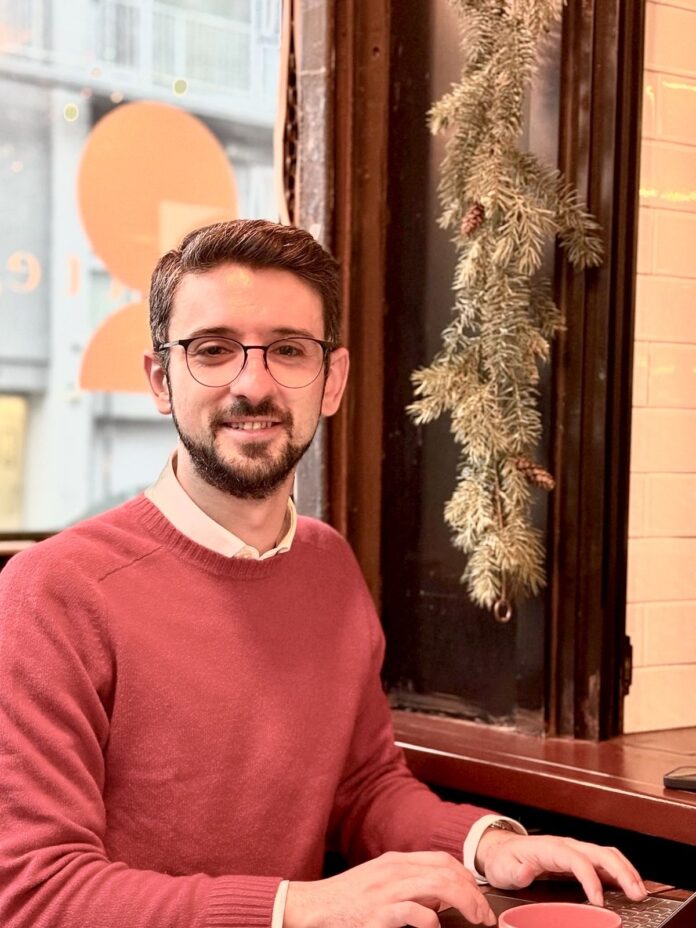
Ali Haydar Ozgun’s story begins in a small town in Turkey, where his early curiosity about the human mind set him on a path that would take him to leading research institutions in Germany and the United States. Today, as Study Coordinator for a groundbreaking NIH/NIDA-funded study at Columbia University and the New York State Psychiatric Institute, Ozgunis working to transform how society understands and treats substance use among formerly incarcerated people.
We sat down with him to discuss his journey, his research, and the role his international background and professional memberships have played in shaping his work.
Q: You’ve had a remarkable journey from Samandag, Turkey, to your current role at Columbia. What inspired you to pursue neuroscience and mental health research?
A: It started in my childhood. I remember visiting a hospital with my step-grandmother and seeing patients in the neurology and psychiatry clinics. A psychologist explained that they study the brain and human behavior. That conversation ignited something in me. I knew I wanted to understand how the brain works and how we can improve mental health.
My path wasn’t easy. I came from a working-class family, but I was fortunate to attend Istanbul Gelişim University, where I graduated as the highest-ranked student in my class and was named Student of the Year by the Psychology Club. Those awards were important—not just as recognition, but because they validated my commitment to the field.
Q: One of your current major projects is the Addiction Treatment Adequacy Post-Incarceration Study. Can you tell us about it?
A: Absolutely. This study is a collaboration between the Columbia University Department of Psychiatry, the New York State Psychiatric Institute, and the University of Wisconsin-Madison’s JUST-US Research Group. Our focus is on people in New York City who have used opioids or cocaine and have recently been released from incarceration.
We follow participants for a year to see how their substance useand access to treatment change over time. We assess whether the treatment they receive matches the American Society of Addiction Medicine’s patient placement criteria. The goal is to identify gaps and improve treatment models.
This work is urgent. Post-incarceration, the risk of drug overdose is 9–17 times higher than in the general population. Addressing that requires evidence-based solutions—and that’s what we’re building.
Q: Your research also extends beyond substance use into internet addiction and coping strategies after sexual violence. How do these projects connect?
A: At first, they seem unrelated. My 2017 published study in Turkey examined the relationship between personality traits, self-esteem, and defense mechanisms in internet addiction. We found clear links between certain personality profiles and higher risk of problematic internet use.
Then, in another line of research, I studied coping strategies among survivors of sexual violence within marriage. That project revealed how people adapt—or struggle—in the face of trauma.
What connects these studies is the broader question of how human behavior interacts with environment, personality, and available support systems. Whether we’re talking about internet use, substance use, or trauma recovery, the underlying dynamics often involve coping mechanisms and structural factors.
Q: You’ve been recognized with multiple awards and are a member of respected research groups. How have these affiliations influenced your work?
A: Awards like the Student of the Year and graduating with High Honors gave me confidence early on. But equally important are my memberships.
I’m part of the JUST-US Research Group at the University of Wisconsin-Madison, the Memory and Metacognition Lab at Brooklyn College, and the Global Psychiatric Epidemiology Group at Columbia University. These memberships are not just symbolic—they connect me with experts, resources, and collaborative opportunities. They also hold me to a high standard, because these groups expect contributions that are meaningful and innovative.
Q: You recently presented at the Guyana Mental Health & Well-Being Conference. How did that experience impact you?
A: It was one of the highlights of my career so far. I presented two studies: one on treatment adequacy for formerly incarcerated drug users in New York, and another on coping strategies among survivors of marital sexual violence in Turkey.
The audience included researchers, clinicians, and policymakers from multiple countries. It reinforced for me that mental health challenges are global and that solutions can be shared and adapted across borders.
Q: Looking ahead, where do you see your work going?
A: I want to expand my research into developing scalable, technology-driven solutions for mental health care—digital platforms for early detection, intervention, and personalized treatment recommendations.
I also want to keep bridging research and policy. Evidence without application changes little, so part of my role is to ensure that our findings influence how treatment programs are designed and funded.
Q: What advice would you give young researchers in mental health and neuroscience?
A: Be persistent. The field is competitive, and funding is never guaranteed. But if your research addresses real human needs, and if you connect with mentors and professional communities, you’ll find ways to make an impact.
Ali Haydar Ozgun’s journey—from a young student in Turkey to a research leader in New York—underscores how personal passion, global collaboration, and rigorous science can combine to address some of the most pressing public health issues of our time. His work not only meets the highest academic standards but also aims to transform lives, particularly for those society too often overlooks.