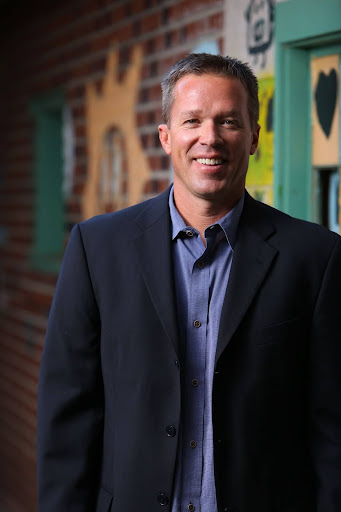
The fear of saying the wrong thing stops more conversations than actual wrong things ever said. When someone experiences loss, friends and colleagues often disappear, not from lack of caring but from paralyzing uncertainty about what to say. Emilio Parga has built his career on liberating people from this fear by teaching them what grief support actually requires.
The answer isn’t eloquence or wisdom or perfectly calibrated sympathy. It’s presence. Simple, steady, authentic presence that communicates one essential message: you don’t have to face this alone.
As founder and CEO of The Solace Tree, Parga has spent years guiding children, teens, families, companies, and athletic teams through the aftermath of death. What he’s learned contradicts much of what mainstream culture teaches about grief support. People don’t need others to fix their pain or explain their loss or provide silver linings. They need someone to sit with them in the darkness without flinching.
This sounds simple until you try it. Most people, confronted with someone else’s raw grief, experience an overwhelming urge to make it better. They offer reassurances that may not be true. They change the subject to lighten the mood. They share their own loss stories, inadvertently shifting focus away from the grieving person. All of these responses come from good intentions but often leave the bereaved feeling more alone.
What Parga teaches instead is structured presence. This means creating spaces where people can express grief without judgment, where silence is allowed to exist without rushing to fill it, where tears are met with acceptance rather than discomfort. It means asking open questions and then genuinely listening to the answers. It means tolerating your own discomfort so the grieving person doesn’t have to manage both their pain and your anxiety.
The work takes him into settings where the stakes are highest. After a student suicide, when a school community is reeling. After a workplace accident, when colleagues are traumatized. After a coach’s sudden death, when a team has lost not just a leader but a father figure. In these moments, The Solace Tree provides the framework that keeps communities from fracturing under the weight of collective grief.
Consider what happens in a typical American household after a death. Parents, trying to protect their children, often avoid detailed conversations about what happened. They use euphemisms like “passed away” or “lost” that leave young children confused. They hide their own tears, modeling the message that grief should be private. They worry endlessly about whether they’re handling it right, which adds anxiety to an already overwhelming situation.
Parga’s approach gives parents permission to be authentic. Children are remarkably perceptive about emotional truth. They know when adults are hiding something, and that knowledge often breeds fear greater than reality. What helps isn’t shielding children from grief but teaching them that grief is a natural response to loss, that all feelings are acceptable, and that talking about the person who died keeps their memory alive rather than making the pain worse.
His professional recognition reflects both the quality and impact of this work. He’s received a PBS Emmy Award, earned Communicator Awards of Excellence and Distinction, and been honored as Citizen of the Year. National organizations have provided scholarships for him to advance his expertise in pediatric palliative care and children’s grief support. But the credentials that matter most are the transformed communities, the children who learn to express rather than suppress their feelings, the families who rebuild connection rather than drifting apart.
The challenges are as much about cultural change as individual support. American society has long treated grief as something to be handled privately and quickly. There’s pressure to “get back to normal,” to “be strong,” to avoid burdening others with ongoing sadness. These cultural messages leave people feeling ashamed of their grief, wondering why they can’t just move on like everyone seems to expect.
Parga works to shift these norms by demonstrating that communities thrive when they talk about hard things together. Not once, not briefly, but repeatedly over time as grief evolves. He shows that acknowledging loss doesn’t keep people stuck in pain but actually helps them integrate the loss and grow forward. He proves that children who learn to talk about grief develop emotional intelligence that serves them throughout life.
The methodology adapts to different contexts while maintaining core principles. With children, conversations might involve art or play alongside words. With teens, group dialogue helps them realize their peers share similar feelings. With families, structured time together rebuilds communication patterns that grief disrupted. With companies and teams, facilitated conversation restores functionality while honoring the human impact of loss.
What makes his approach effective is its refusal to rush healing. Grief doesn’t follow timelines. It circles back unexpectedly. It resurfaces during holidays, anniversaries, moments that would have been shared with the person who died. Support that only shows up immediately after death misses most of grief’s journey. Sustainable support teaches communities how to continue showing up, how to remember together, how to make space for both grief and joy.
Looking forward, Parga envisions expanding this model nationally. He wants to train facilitators who can bring intentional grief dialogue to more communities. He’s developing resources that give people practical tools rather than abstract advice. He’s strengthening partnerships with schools, athletic programs, and organizations to build grief literacy into their cultures.
The vision rests on a fundamental belief: no one should face loss unprepared or alone. Not children trying to make sense of death. Not parents terrified of saying the wrong thing. Not workplaces suddenly navigating tragedy. Not teams that lose a member and don’t know how to honor them while moving forward. Everyone deserves access to frameworks that transform grief from an isolating experience into a connecting one.
The lessons he’s absorbed over years of facilitating these conversations apply far beyond grief. Presence matters in all difficult moments, not just death. Listening beats advice-giving in most situations. People need space to be authentic more than they need others to fix things. Communities that talk about hard topics build trust that carries through easier times. These insights reshape how people show up for each other across all of life’s challenges.
For someone whose work centers on death, Parga carries remarkable hope. Not the false optimism that everything will be fine, but the grounded hope that comes from witnessing transformation. He’s seen families on the brink of collapse learn to communicate again. He’s watched children paralyzed by confusion find their voices. He’s observed teams that could have disbanded instead grow closer through shared grief. These experiences prove that the right support at the right time changes trajectories.
The work matters because grief is universal but support remains inconsistent. Some communities have resources and know how to mobilize them. Others flounder, meaning well but lacking structure. Some families have elders who model healthy grief. Others have generations of silence that leave everyone ill-equipped. Parga’s mission is leveling this access, ensuring that whether you’re in a well-resourced suburb or a struggling rural town, whether your family talks openly or never mentions death, you still receive support that helps rather than isolates.
The invitation he extends is both to individuals and institutions. Learn how to be present without needing to fix. Ask questions without assuming answers. Sit with discomfort rather than fleeing from it. Build these capacities before crisis hits, so when loss arrives, as it inevitably will, communities respond with connection rather than silence. Choose intentional dialogue over well-meaning avoidance. Trust that presence, not perfect words, is what grieving people need most.