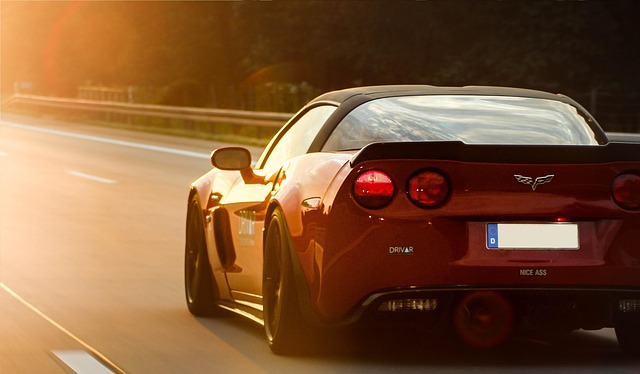
For years, drivers have debated whether owning a red vehicle makes you more likely to be pulled over or cited for traffic violations. The idea has lived everywhere from car culture forums to police TikTok videos—and most people have dismissed it as urban legend. However, a new national analysis from Levine and Wiss comparing U.S. vehicle color distribution against traffic stop records, crash reports, and demographic trends suggests the stereotype may not be entirely fictional.
According to the latest full study findings, red cars represent approximately 15% of vehicles on American roads. Yet they rank second nationwide for traffic stops and citations, ahead of gray and silver, and behind only white vehicles—whose dominance aligns directly with their overwhelming market share. What makes red stand out, researchers note, is that enforcement numbers are not proportional to how common the color actually is.
Even after accounting for how many exist on the road, red vehicles are about 10% more likely to be involved in a traffic violation compared to the average car. They also appear in 4% more front-end collisions than expected for their share of the national fleet and are linked to a significantly higher occurrence of single-vehicle rollover crashes—approximately 25% above their predicted baseline.
Researchers emphasize that this does not necessarily mean red cars are inherently more dangerous. Instead, they suggest a combination of perception, driver behavior, and demographic preference plays an important role.
Red has long been one of the most symbolically loaded colors in culture, associated with speed, confidence, and visibility. Studies in psychological research have linked the color to heightened emotional response, and in automotive culture, red has been closely tied to high-performance vehicles and expressive purchasing decisions.
That context appears to mirror the data on who drives them. Men select red vehicles at a roughly 12% higher rate than women, and young adults are particularly drawn to the color. Around 20% of new vehicles purchased by drivers aged 18 to 34 are red, making younger motorists disproportionately represented among red-car ownership. These are also the same demographics most likely to receive traffic citations statistically, regardless of vehicle color—suggesting behavior, rather than paintwork alone, may influence enforcement outcomes.
Yet visibility also matters. While black cars have the highest likelihood of being involved in crashes nationally—about 12% more than white cars—red sits in an interesting middle ground. It does not top the danger charts, but it attracts more attention on the road, both visually and perceptually. Police and safety analysts suggest that high-contrast colors, especially in dense traffic or during aggressive maneuvers, may naturally draw human attention more quickly than neutral tones.
Insurance, however, tells a different story. Despite persistent folklore, vehicle color has no impact on insurance pricing in the United States. Premiums are determined by driver history, vehicle model, location, and safety records—not pigmentation. Industry pricing models do not treat red vehicles as inherently riskier, even though enforcement and behavioral trends suggest they may feature more often in violations.
Outside enforcement and crash risk, red continues to hold strong cultural weight in American motoring identity. It remains one of the most iconic performance car colors, particularly for sports coupes, muscle cars, and convertibles. Around 30% of sports cars globally are red, and nearly half of vintage muscle car restorations favor the shade.
Red also has a growing presence in electric vehicles and hybrid markets, where its adoption has risen significantly over the past three years. Analysts believe this reflects both aesthetic preference and branding, with manufacturers increasingly leaning on bold color identity to differentiate models.
Ultimately, the study concludes a nuanced reality: red cars are not objectively the most dangerous vehicles on the road, nor do they receive the most tickets overall. However, they are statistically more likely to attract attention, feature disproportionately in enforcement outcomes, and appear in certain crash categories more often than their market share would predict.
In other words, the myth doesn’t quite hold up in its most dramatic form—but it isn’t entirely unfounded either. Red cars do stand out, both visually and behaviorally, and on America’s roads, that visibility appears to come with consequences.