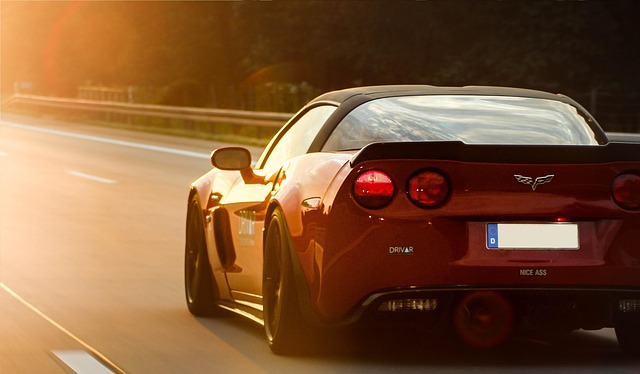
For decades, one of the most persistent motoring myths in America has been that red cars are magnets for police attention. It has lived on through pop culture, internet debates, and driver folklore — often dismissed as superstition. But new national traffic data suggests there may be measurable truth behind the legend, and the reason has more to do with people and behavior than with paint.
While red cars make up around 15% of vehicles on U.S. roads, they consistently rank second nationwide for traffic stops and citations, behind white cars — a result that cannot be explained purely by how many are on the road. The latest red vehicle safety and enforcement analysis reveals that red vehicles are also 10% more likely to be involved in a traffic violation, 4% more likely to appear in front-end collisions, and 25% more likely to be involved in single-vehicle rollovers than their overall road share would predict.
The research by Levine and Wiss confirms something important: the red car effect isn’t just cultural. There are consistent statistical patterns linking color, risk, enforcement visibility, and driver demographics.
A Color Linked With Personality — and Certain Drivers
Red is rarely a neutral choice. It is traditionally associated with speed, status, and confidence, which influences who drives these cars and how they are driven.
Study insights show:
-
Men choose red vehicles 12.3% more often than women
-
The average red car owner is 45, slightly younger than typical U.S. vehicle owners
-
Around 20% of new vehicles purchased by 18–34-year-olds are red
-
Red dominates emotionally expressive vehicle segments such as sports cars, coupes, convertibles, and performance trim models
When combined with U.S. driving trends — younger and male drivers being statistically more likely to speed, engage in risky behaviors, and receive citations — the enforcement numbers begin to make sense. Red may draw attention, but much of the disparity comes from who chooses it.
The color has also surged in popularity in modern market segments. Red electric vehicles and hybrids have increased by 30% in the past three years, and nearly 30% of global sports cars sold are red, reinforcing the emotional connection between the color and expressive driving.
Safety Is About Visibility — And Red Isn’t the Riskiest Color
Interestingly, while red shows elevated ticketing and some crash involvement, it is not the most dangerous color on the road.
Long-term crash research confirms:
-
Black vehicles are 12% more likely than white vehicles to be involved in crashes, largely due to visibility issues
-
Gray and silver vehicles show similarly elevated risks
-
Red vehicles are approximately 7% riskier than white, placing them mid-tier in overall accident likelihood
Red’s visual distinctiveness likely helps it avoid being the most crash-prone color. In many daylight and roadway conditions, red stands out. By contrast, darker tones blend into nighttime roads and low-light environments, where crash risk increases dramatically.
However, the data does show that when red vehicles are involved in incidents, they disproportionately appear in front-impact crashes and single-vehicle rollovers — categories often associated with aggressive maneuvers, speed, over-correction, or loss of control.
Enforcement Reality vs. Insurance Myths
One long-standing rumor claims red cars are more expensive to insure. That remains false. Insurance companies do notrate policies based on color.
Premiums are calculated based on:
-
vehicle make and model
-
driver history
-
location
-
mileage
-
claims trends
Color is irrelevant.
But there is one part of the stereotype that remains grounded in reality: visibility to enforcement. Red cars stand out more visually, are more memorable, and are often associated with faster or more assertive driving. Combined with the demographic tendencies of their owners, the color’s presence in ticketing statistics is unsurprising.
A Symbol — and a Signal
The story of red cars is less about superstition and more about human behavior. Red vehicles are often chosen by drivers who like to be seen, who associate driving with personality, and who may drive with more confidence or speed. Police notice them. Other drivers notice them. Crash statistics do as well.
They are not the most dangerous vehicles on the road. They are not the most frequently ticketed. But they are more involved in enforcement and specific crash types than their numbers alone should suggest.
In short: the myth isn’t entirely wrong. Red cars really do attract more attention — and in traffic safety, attention has consequences.