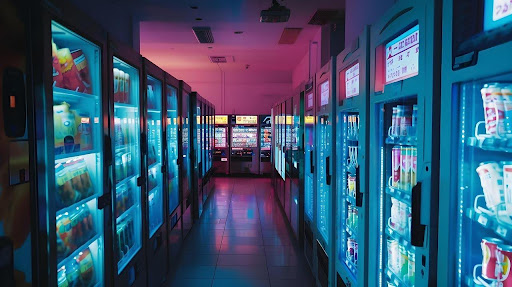
Traditional vending operators face rising costs, inefficient restocking routes and a stubborn shrinkage rate driven by theft and untracked inventory. Margins are tight, and small inefficiencies add up fast. AI vending is often presented as the solution, but it comes with a higher upfront price tag.
That said, where do the savings and revenue gains actually come from, and how quickly do they offset the higher CapEx compared to traditional vending? This guide walks through how to calculate the ROI for AI vending versus traditional vending.
What is the typical initial capital expenditure (CapEx) difference between AI and traditional machines, and how is this justified in the ROI calculation?
A new traditional vending machine typically costs between $2,000 and $5,000, depending on size, configuration and features. In contrast, an AI vending unit usually starts from $6,000 and can reach $15,000 or more for fully featured models.
The justification lies in what the higher CapEx replaces. AI vending machines integrate cameras, weight sensors, cashless payment systems and cloud connectivity. These features remove the need for separate telemetry hardware, third-party auditing services and frequent manual checks.
In a proper ROI calculation, CapEx should be weighed against total lifetime cost and revenue potential, not just purchase price. Over a typical five- to seven-year operational lifespan, AI hardware consolidates multiple functions into one platform, reducing both operating expenses (OpEx) and hidden costs associated with downtime, stockouts and manual monitoring.
How does predictive maintenance and real-time telemetry in AI systems reduce OpEx compared to the reactive repair and manual auditing required by traditional machines?
Traditional vending relies heavily on reactive maintenance. When a machine breaks, sales stop until a technician arrives. Often, operators discover failures only after they have lost revenue.
AI vending machines continuously report temperature, component health, payment failures and door activity. According to the AI vending experts at SmartMarket Solutions, predictive maintenance uses this data and technology to flag issues before they cause downtime. For example, replacing a cooling fan early is far less expensive than waiting for a full compressor failure.
This proactive approach reduces emergency service calls, lowers technician labor costs and can cut machine downtime by 30 to 40 percent. Additionally, real-time telemetry eliminates the need for frequent manual auditing routes, improving operational efficiency and consistently lowering OpEx month after month.
What impact do personalized recommendations, targeted advertising and dynamic pricing (enabled by AI) have on average transaction value and overall revenue compared to static pricing?
Traditional vending operates on static pricing. Every customer sees the same products at the same price regardless of time, demand or buying behavior.
AI vending machines use vision and transaction data to surface personalized recommendations, run on-screen promotions and adjust prices based on demand. Dynamic pricing allows higher margins during peak hours and targeted discounts during slow periods.
In real-world deployments, the average transaction value often increases by 10–25 percent. Add revenue from digital advertising placements on machine screens, and AI vending introduces entirely new income streams that do not exist in traditional vending.
How does improved inventory management via AI-driven supply chain data affect restocking frequency, labor costs and lost sales due to stockouts?
Inventory blind spots are among the biggest profit leaks in the vending machine business. Traditional machines are restocked on fixed routes rather than based on actual demand. This leads to overstocking slow items and running out of bestsellers.
AI-driven inventory management provides real-time SKU-level visibility. Operators restock only what sells and only when needed. Routes become shorter, fuel costs drop and labor hours shrink. More importantly, stockouts decrease.
Lost sales from empty spirals can quietly erase thousands per machine each year. AI systems consistently reduce stockout-related losses by 15–20% while lowering restocking frequency.
What is the estimated payback period for investing in a network of AI vending machines versus the operational lifespan and maintenance costs of a traditional setup?
A traditional vending machine may reach payback in 12 to 24 months, assuming stable placement and modest maintenance costs are in place. However, over its lifespan, rising labor costs, repairs and missed sales eat into profits.
AI vending machines typically reach payback in 12 to 36 months. That timeline reflects higher CapEx but significantly stronger revenue and lower OpEx. Over a seven-year operational lifespan, AI vending machines often generate net profits 30 to 50 percent higher per unit.
Conclusion
Despite a higher initial investment, AI vending machines offer a significantly better ROI than traditional ones. They are a financially superior long-term venture for operators willing to invest in the future.
That said, are you looking for a clear plan and realistic payback assumptions for an AI vending machine business? Reach out to the AI vending experts at SmartMarket Solutions to get started.