A review of 70 empirical studies identifies the leadership signals that matter when colleagues work across locations.
A leader can be competent and fair yet still lose the confidence of a distributed team if employees rarely see how decisions are made. Hybrid work changes the signals people use to judge managers. An unexplained promotion, a missed response or an uneven allocation of opportunities can carry greater weight when informal office conversations are less frequent.
A 2026 paper in Strategy & Leadership by Dr Imo Enang and five co-authors examines how organizations can sustain trust in these conditions. Keeping Trust When Leaders Go Hybrid synthesises 70 empirical studies retained from a Scopus-based search that initially identified 216 records.
Two kinds of trust
The authors distinguish between cognition-based trust, shaped by perceptions of competence, reliability and fairness, and affect-based trust, shaped by care, accessibility and human connection. Both are essential, but they may be affected differently when managers and employees do not regularly share a workplace.
Phases and mechanisms
The review examines trust across four phases: pre-crisis baseline, crisis, stabilisation and maturation. It identifies four practical mechanisms: predictable communication cadence, legibility of judgement, engineered proximity and monitoring governance. Each describes a leadership behaviour that can be designed deliberately.
Predictable cadence means employees know when decisions and updates will arrive. Legibility of judgement means managers explain the evidence and criteria behind important choices. Engineered proximity creates purposeful opportunities for connection, including mentoring and informal conversations. Monitoring governance ensures that performance oversight is transparent and proportionate.
Reliability, fairness and care need to be demonstrated in ways that employees can observe, understand and question, wherever they work.
Fairness at a distance
These principles are especially important when promotion opportunities and high-profile assignments are at stake. Employees working remotely may have fewer spontaneous encounters with senior managers. Organisations can respond by publishing selection criteria, recording decisions and reviewing whether comparable employees have equitable access to development.
The study also challenges the assumption that constant digital visibility is a reliable measure of performance. An employee who responds immediately to every message is not necessarily producing better work than someone who spends uninterrupted time solving a difficult problem. Oversight should reflect meaningful outcomes and appropriate quality standards.
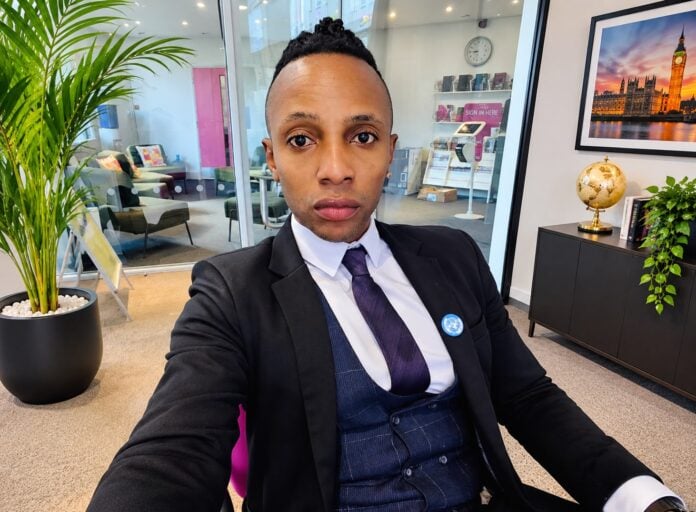
Enang, Senior Lecturer and Programme Lead, MSc Project Management (Online), at the University of Greenwich and Founder and CEO of VLV Group, works across academic leadership, executive education and organisational strategy. His interest in hybrid trust connects with the wider challenge of making governance visible in complex organisations.
The paper is a structured review and does not claim that one set of practices guarantees trust. Its message is nevertheless useful for managers: reliability, fairness and care need to be demonstrated in ways that employees can observe, understand and question, wherever they work.
Research
Enang, I., Okpanum, I., Omeihe, K., Omeihe, I., Elinwa, T. and Onyia Babatope, V. (2026). Keeping trust when leaders go hybrid: a phase map and playbook for sustaining follower trust. Strategy & Leadership.
https://doi.org/10.1108/SL-10-2025-0339
Dr Imo Enang is a scholar-practitioner, Senior Lecturer and Programme Lead, MSc Project Management (Online), at the University of Greenwich and Founder and CEO of VLV Group, which comprises Ambidexters, ImpactCity and SkillHubs. Further information: imoenang.com.