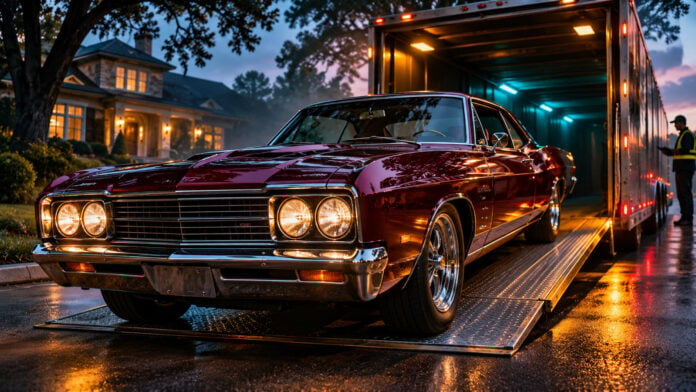
A classic car purchased hundreds of miles from home can look immaculate in a listing, pass an inspection and still arrive with problems the buyer never anticipated. Some problems involve undisclosed defects. Others begin when an unsuitable transport method is chosen, a large carrier cannot reach the pickup address, or the vehicle’s condition is documented poorly before loading. By the time the car reaches its destination, separating those issues can be difficult.
For a long-distance buyer, arranging transportation is part of the purchase itself. A rare coupe, an older convertible or a carefully restored muscle car may have mechanical limitations, unusual ground clearance, delicate exterior components or a value that makes ordinary shipping assumptions inappropriate. Those details need attention before the seller hands over the keys.
The challenge is to understand which risks belong to the purchase, which belong to transportation and which can be reduced through better records. A higher shipping price alone does not settle those questions.
The purchase can go wrong before a carrier is booked
The first risk is not necessarily physical damage. It is uncertainty about whether the advertised vehicle exists, whether the seller controls it and whether the condition described in the listing is accurate.
In September 2026, the Federal Trade Commission warned that criminals were copying genuine dealership websites and using those imitations to advertise vehicles they did not own. Some listings featured rare muscle cars or difficult-to-find classics, making the schemes particularly relevant to enthusiasts searching beyond their local market.
The FTC advised prospective buyers to investigate sellers, independently inspect vehicles when an in-person visit is impractical and be suspicious of demands for payment exclusively by wire transfer.
A legitimate-looking website, professional photographs and a detailed description are not proof of ownership. Before discussing transport schedules, a buyer should establish the seller’s identity and confirm that the specific vehicle can actually be inspected.
Vehicle identification deserves equal attention. A modern vehicle identification number generally contains 17 characters, and the National Highway Traffic Safety Administration maintains a public VIN decoder that can provide manufacturing information. Older collectible cars may use different identification formats, so buyers must evaluate those vehicles according to their production period and available historical records.
VIN decoding cannot establish the full mechanical condition of a classic car or prove that its restoration was completed correctly. Matching identification records, reviewing available ownership documents and commissioning an independent inspection address different questions.
A vehicle history report may reveal relevant title or reported accident information, but incomplete historical records are common concerns with older vehicles. No single report should replace a physical inspection by someone familiar with the model.
Open versus enclosed transport is a question of exposure, not prestige
Once the vehicle and seller have been assessed, the buyer must decide how the car should travel. Two common choices are open transport, in which vehicles ride on exposed trailers, and enclosed transport, which places them inside covered equipment.
Open carriers are widely used for ordinary passenger vehicles. They can be an appropriate option when price, route availability and the vehicle’s condition justify the level of exposure. An enclosed carrier adds protection from direct weather exposure, airborne road debris and certain environmental hazards encountered during transit.
For a collector car, that difference can matter. Fresh paint, delicate trim, unusual bodywork and exterior components that are difficult to replace may influence the decision. A highly valued restoration may justify additional transport precautions, but not every older vehicle automatically requires enclosed service.
The relevant distinctions are explained in A-1 Auto Transport’s enclosed carrier guide, which describes covered vehicle transportation and its suitability for classic, vintage and other specialty automobiles.
Enclosed service should not be mistaken for a guarantee against every possible problem. Loading procedures, equipment suitability, vehicle securement, carrier experience and documented condition still matter. A covered trailer cannot correct an undisclosed mechanical defect or compensate for an inspection that never happened.
There is also a practical tradeoff. Enclosed equipment may be less readily available on a particular route than conventional open transport. Buyers should compare not only quoted prices but also pickup flexibility, scheduling requirements and the equipment proposed for the actual vehicle.
The appropriate choice depends on the vehicle’s characteristics and the buyer’s tolerance for exposure and potential repair costs. A partially restored project car and a finished show vehicle may warrant very different transport decisions despite sharing the same age and manufacturer.
A low classic car may require more planning than an expensive one
Collectors sometimes focus on market value when evaluating shipping requirements, but physical dimensions can be equally important. A low front spoiler, long wheelbase, modified suspension or unusually narrow tire clearance may complicate loading.
Older sports cars and restored vehicles can also have starting or braking characteristics unfamiliar to a driver who regularly handles newer passenger vehicles. A car that cannot move under its own power presents a different loading problem from one that can be driven normally.
These conditions should be disclosed when requesting transport arrangements rather than discovered at the loading location. The carrier needs accurate information about the vehicle’s ability to move, dimensions and relevant modifications so it can assess equipment suitability.
Photographs are useful, especially when they show ride height, visible body modifications and anything extending beyond the standard vehicle dimensions. They should supplement accurate descriptions rather than replace them.
Buyers also need to consider what the seller means when describing a vehicle as running. A car may start and move a short distance while still having unreliable brakes, electrical problems or a cooling system that requires attention. Those conditions can change how practical and safe ordinary loading will be.
The carrier should determine appropriate loading arrangements using its equipment and professional procedures. The buyer’s job is to communicate the vehicle’s actual condition without minimizing known limitations to obtain a more attractive quote.
Door-to-door service does not promise access to every driveway
Another common misunderstanding concerns pickup and delivery locations. Door-to-door auto transport generally means the carrier attempts to collect and deliver the vehicle at the designated addresses, subject to safe and lawful access.
A residential driveway may look perfectly accessible to an ordinary car while being unsuitable for a large commercial transport vehicle. Narrow streets, sharp turns, low branches, overhead wires, parking restrictions and neighborhood rules can prevent a carrier from reaching the property.
For a classic-car purchase, this creates an additional complication because the seller may be available only during a limited window. A buyer who assumes the truck will arrive directly outside the seller’s garage may face a last-minute change of meeting location.
The practical considerations are described in how residential vehicle pickup works, including the need to account for access limitations and arrange a nearby suitable meeting point when direct access is not possible.
Transport coordination should begin with the actual pickup address, not simply a ZIP code. The buyer or seller can identify known access limitations, while the carrier makes the final assessment of where it can operate.
When an alternate location is necessary, both parties should agree who is responsible for bringing the vehicle there. That detail is particularly important when the classic car is not registered for ordinary road use, has mechanical limitations or should not be driven unnecessarily.
The destination deserves the same scrutiny. A collector may have ample garage space but live on a street where a transport truck cannot stop safely. Arranging a suitable delivery location before dispatch can prevent confusion when the carrier reaches the area.
The handoff establishes what condition the vehicle was actually in
The most useful time to document shipping condition is before the car enters the carrier’s custody. Waiting until delivery creates uncertainty about which scratches, dents, interior marks or missing components were already present.
A condition report should identify visible imperfections in enough detail to distinguish them later. Photographs can provide additional evidence, particularly when they show the vehicle from several angles and capture specific vulnerable areas.
For classic vehicles, ordinary inspection categories may need closer attention. Chrome trim, restored body panels, aftermarket accessories, delicate mirrors, unusual underbody components and existing paint defects can all influence the condition record.
Pickup and delivery arrangements, including the importance of coordinating the exchange, are discussed in this vehicle handoff reference.
Buyers should also identify who will be physically present at collection. When the purchaser lives in another state, the seller or an authorized representative may be the only person available to observe the vehicle before loading.
That person needs to understand what they are being asked to confirm. A signature on a condition document should not be treated as a routine administrative step when it records the vehicle’s state at transfer.
At delivery, the recipient should compare the vehicle’s visible condition with the pickup documentation and record any apparent differences promptly, following the carrier’s applicable reporting procedure.
The document commonly used to record shipment and vehicle-condition information is the bill of lading. Its precise content and contractual significance depend on the transport arrangement. Buyers should review the documents provided rather than assume every carrier uses identical forms or terms.
Carrier registration and insurance need separate checks
A professional website and an attractive quote are not enough to establish that a transport business is appropriately authorized. The Federal Motor Carrier Safety Administration advises consumers to distinguish between auto transport brokers, which arrange shipments, and motor carriers, which physically transport vehicles.
FMCSA states that interstate auto transport brokers and carriers are subject to federal registration requirements. Its public records allow consumers to investigate identifying numbers and company information before committing to a shipment.
This check matters because a buyer may communicate with a broker during booking but encounter a different company when the vehicle is collected. Understanding which business arranges the shipment and which operates the truck helps establish accountability.
Insurance deserves its own conversation. A statement that a carrier has insurance does not explain the coverage available for a particular loss, applicable exclusions, deductibles or the process for presenting a claim.
Owners of highly valued classic cars should review the transport agreement, request relevant coverage details and discuss the planned shipment with their own automobile insurer when appropriate. The objective is to understand what protection applies before the vehicle is handed over.
Registration verification and insurance review answer different questions. One concerns a business’s regulatory status. The other concerns the financial consequences of damage or loss under specific circumstances.
A cheap shipping quote can become expensive when the details are missing
Comparing transport quotes without comparing service descriptions can mislead buyers. Two offers for the same route may differ in equipment type, pickup window, vehicle-condition assumptions, access arrangements and the responsibility assigned to each party.
A lower price might reflect a legitimate operational advantage. It might also omit a requirement that becomes apparent only after booking. Buyers should resist treating price as a complete description of the service.
A useful comparison should address the following questions:
- Will the vehicle travel on open or enclosed equipment, and is that equipment suitable for its dimensions and condition?
- Is the proposed pickup location accessible to the expected carrier, or might a nearby meeting point be needed?
- Who will inspect and release the vehicle, and how will its condition be recorded before loading?
- What does the transport agreement say about scheduling, additional charges, insurance, delivery inspection and reporting damage?
These questions provide a stronger basis for comparing arrangements than a headline price alone. They also help the seller understand what will be expected when the carrier arrives.
Buyers should allow sufficient flexibility for coordination, especially when the vehicle is at a distant private residence, repair facility or collector’s storage location. A narrow collection window can make an otherwise suitable transport arrangement difficult to execute.
The Federal Trade Commission’s warnings about fraudulent vehicle sales provide another reason to keep purchase payments and transportation arrangements clearly documented. A seller demanding unexplained additional fees or unusually restrictive payment methods deserves scrutiny.
The final inspection should close the transportation record
A car arriving at the destination is a major milestone, but it is not the final step in a carefully managed purchase. The buyer still needs to establish whether its visible condition matches the pickup records and whether any concerns require immediate documentation.
Inspection is easier when delivery takes place in adequate lighting and the recipient has access to the original photographs or condition report. If a difference is discovered, the recipient should document it and follow the applicable contractual reporting process.
It is important to distinguish shipping-related concerns from defects that were already present or that become apparent only during later mechanical evaluation. A starting problem discovered after delivery does not, by itself, establish that the carrier caused it. A documented change in visible body condition may raise a different question.
The same principle applies to missing accessories, loose parts and personal property. Buyers should clarify what the carrier accepts and what the seller is responsible for removing or securing before collection.
In the end, a successful long-distance classic-car purchase depends on several independent decisions being made correctly. The seller must be credible, the vehicle must be accurately represented, the transport method must suit the car, and the handoff documents must be useful if something unexpected happens.
For a collector purchasing a car sight unseen, those safeguards can matter as much as the difference between two shipping quotes. The most defensible purchase is not the one that assumes nothing will go wrong. It is the one that leaves a clear record of what was bought, how it was moved and what condition it was in when it arrived.