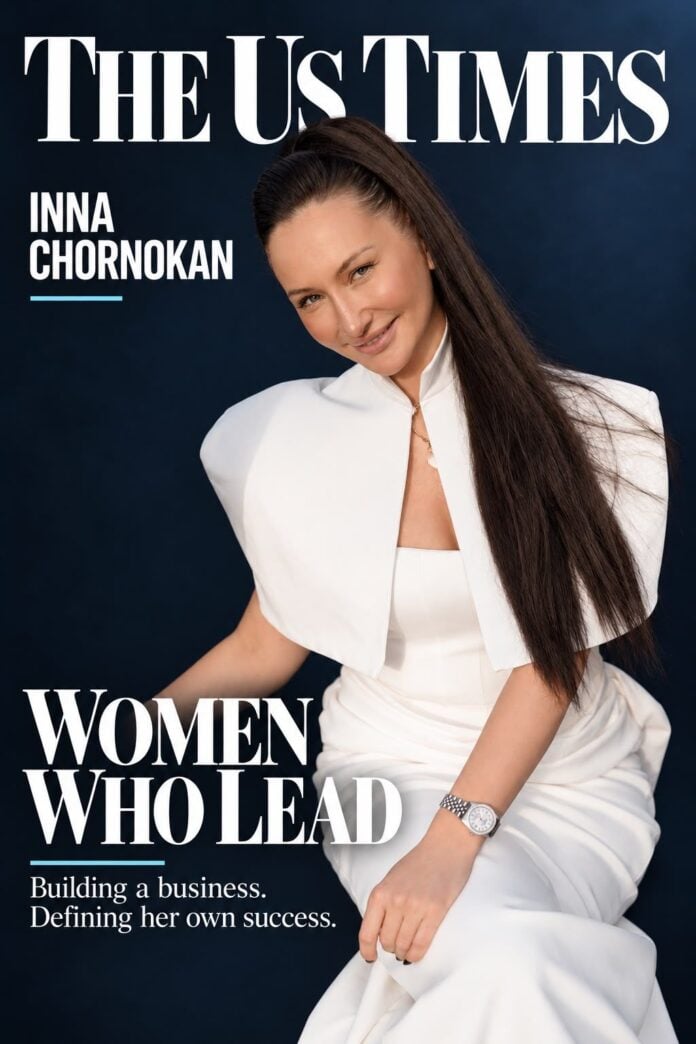
There is a particular kind of confidence that comes from building something yourself. It develops through decisions that carry consequences, skills acquired over years, and the experience of taking responsibility when there is no one else to make the final call.
For Inna Chornokan, founder of IC Medical SPA, that journey began with a medical education and continued through a move to the United States, further professional training, and the opening of her own practice. She earned her medical degree in 2012 and subsequently became a Registered Nurse with a Bachelor of Science in Nursing. Her background includes work in hospital operating rooms alongside her experience in aesthetics.
Today, her business has grown into a network of five locations. Behind that expansion is a story that reaches beyond beauty: a woman developing her expertise, creating a career on her own terms, and learning how to lead as the business becomes larger than her individual practice.
In this proposed cover interview, Chornokan reflects on starting from the beginning, building a team, and the daily work behind female entrepreneurship.
Your career began in medicine. How did that foundation shape your approach to business?
My medical education gave me a serious attitude toward responsibility. You learn to pay attention, keep studying, and recognize the limits of what you know. Those habits are valuable when you build a business, too. Enthusiasm can help you begin, but you need knowledge and good judgment to keep going.
When I moved into aesthetics, I wanted my work to reflect that foundation. Opening my own practice gave me the opportunity to develop a business around the standards I considered important. It also meant accepting responsibility for much more than my own work.
What did starting from zero mean for you?
I had an education and experience, so I was not beginning without skills. But establishing yourself in a new country requires you to build a professional life again. You have to understand a different environment, continue your education, and earn the trust of people who do not know your history.
Opening my own office was an important step. It made the ambition concrete. From that point, there were decisions to make and work to do every day. I think that is something many women recognize: you may have a clear picture of the future, but you reach it through very ordinary, practical steps.
Your business has grown to five locations. How does expansion change a founder’s role?
As the business grows, being a strong individual specialist is only part of the job. You need to think about how people work together, how expectations are communicated, and how the business functions when you are not personally involved in every detail.
That requires a different kind of attention. A founder can become very attached to doing everything herself because she knows how she wants it done. But expansion asks you to develop other people and give them the clarity they need to succeed. You remain responsible for the direction while learning to share the work.
What matters most when building a team?
Professional competence matters, and so does the way someone approaches responsibility. I would look closely at whether a person asks thoughtful questions, accepts feedback, and treats colleagues and clients with respect. Those qualities influence the working environment every day.
A team also needs clear expectations. People should understand their responsibilities and know where to turn when something needs attention. You cannot expect consistency if everyone is left to interpret the standard differently. The founder has to make that standard understandable and demonstrate it through her own behavior.
How do you balance high expectations with supporting the people who work with you?
By being specific. If something needs improvement, people should understand what needs to change and why. General criticism rarely helps someone do a better job. Clear feedback gives them something they can act on.
Supporting a team also means being willing to listen. The people doing the daily work may see a problem before you do. I think a leader needs enough confidence to hear that information without taking it as a personal challenge. High expectations are more useful when people feel able to raise questions.
What does independence mean to you as a woman in business?
It means having a voice in the direction of my own life. Building a career creates choices, but those choices come with obligations. You have to make decisions, understand their consequences, and keep working when the initial excitement has passed.
I also think independence includes knowing when to ask for help. You do not become less capable because you learn from someone or bring the right people into the business. There is confidence in recognizing what you can do well and what requires another person’s expertise.
Many women wait until they feel completely ready to begin. What would you say to them?
Take your preparation seriously, especially in a field where qualifications and professional requirements matter. At the same time, do not expect every uncertainty to disappear before you take a step. Some things become clear only through experience.
Start with something you can explain clearly: what you are qualified to offer, who it is for, and what you need to deliver it properly. Then work on that foundation. A first step does not have to look impressive from the outside to be important for your future.
How has your understanding of confidence changed?
Confidence has become quieter. It is less about appearing certain and more about knowing that I can approach a problem thoughtfully. Experience teaches you that there will always be something new to learn.
There is also confidence in being able to change your mind when you have better information. Running a business involves judgment, and good judgment requires you to stay open. I want my decisions to be grounded in what the situation needs.
What do you want other women to take from your story?
That your professional life can develop beyond the role in which you began. Education can lead to practice, practice can lead to ownership, and ownership can teach you to lead. Each stage asks something different of you.
You do not have to have the whole journey mapped out. You do need to take your abilities seriously and be willing to develop them. For me, building something of my own has meant continuing to learn while accepting more responsibility. That is the part of success I would want another woman to see.