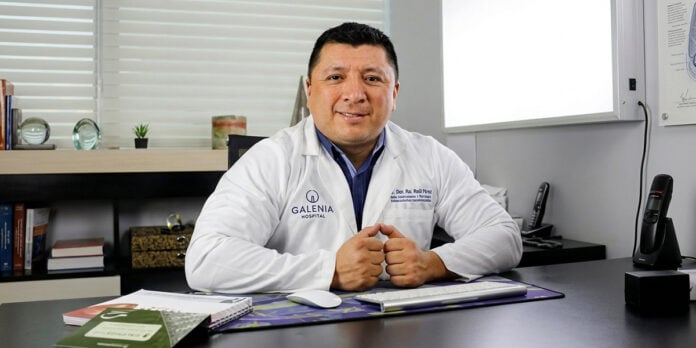
Dr. Raul Arjona, orthopedic surgeon and traumatologist at Dr. Raul Arjona Orthopedia Articular, believes excellence in orthopedics and sports medicine is about accurate diagnosis, appropriate treatment selection, clear communication, and a recovery plan that reflects the patient’s needs as much as it is about performing a technically successful procedure.
Orthopedic problems affect every part of daily life. A person dealing with a sports injury, a fracture, ongoing joint degeneration, or an issue that makes ordinary movement difficult needs good care that begins before any procedure and continues after it ends.
Dr. Raul Arjona’s training includes orthopedics and postgraduate specialization in joint reconstructive surgery and arthroscopy. He is also certified by the Mexican Council of Orthopedics and Traumatology and is a member of professional organizations including ISAKOS, AMECRA, and FEMECOT.
Excellence Begins With the Right Diagnosis
Pain is not enough for a diagnosis. Two orthopedic conditions can produce similar symptoms but require very different treatments. Knee pain, for instance, may come from arthritis, a meniscus injury, ligament damage, or another structural problem. Hence, the initial evaluation becomes especially important.
Here is how Dr. Raul Arjona sees the very first step: identifying the source of a problem is the starting point for deciding what should happen next. However, that is not enough either. In orthopedic care, imaging is valuable, but an image cannot tell the entire story on its own. Symptoms, physical examination, activity level, medical history, and the patient’s goals all matter. A scan should help guide the diagnosis but not replace clinical judgment.
Patient-Centered Treatment and Dr. Raul Arjona
The same diagnosis does not necessarily mean the same treatment for every patient.
Consider an athlete who wants to return to competition. Their priorities may differ considerably from those of an older adult who wants to walk comfortably and maintain independence. Someone with a physically demanding job may have another set of concerns altogether.
In orthopedic care, communication must always be prioritized. The American Medical Association states that physicians should give patients enough information to understand their condition and treatment options. Research in orthopedic surgery has also linked shared decision-making with better patient knowledge and decisions that more closely reflect individual goals. Ultimately, communication becomes part of the treatment itself.
Patients should feel comfortable asking direct questions. What options are available? What happens if surgery is postponed? How long might recovery take? What will rehabilitation involve? What limitations should they expect?
Clear answers provide reassurance and allow patients to take an informed role in decisions about their own care.
Surgery Should Serve a Larger Recovery Goal
Orthopedic surgery now includes a wide range of procedures, from arthroscopy and ligament repair to joint replacement, fracture repair, osteotomy, and revision surgery. Minimally invasive approaches can offer important benefits in appropriate cases.
Still, the availability of advanced technology should not be the reason a particular procedure is chosen. The question to ask should relate to the type of procedure meant to be achieved.
Dr. Raul Arjona works across joint reconstruction, arthroscopy, trauma, and sports medicine, including conditions involving the knee, hip, and shoulder. His professional work has also included serving sports teams in Quintana Roo, giving him experience with the particular demands that athletic injuries can create.
In sports medicine, getting an athlete back on the field quickly is only one portion of the treatment plan. The injury has to heal, and strength and function need to return. The demands of the particular sport need to be considered, along with the risk of another injury.
Similarly, outside professional sports, the purpose of treatment is not simply to complete a procedure. It is to help the patient regain useful function.
Rehabilitation Is Also Part of the Treatment
Rehabilitation can be easy to overlook when the focus is on surgery. But completing a procedure does not automatically restore strength, movement, confidence, or everyday function. Depending on the condition and treatment, recovery may involve physical therapy, progressive strengthening, mobility exercises, activity changes, and ongoing monitoring.
Research on post-operative rehabilitation has also highlighted the value of involving patients in recovery decisions, not just discussing appropriate procedures. A 2026 study examining rehabilitation after distal radius fracture surgery found support among patients and clinicians for shared decision-making, while emphasizing the need to give patients enough information to participate effectively. Recovery is something patients actively participate in.
Dr. Raul Arjona emphasizes personalized care during recovery. Apart from a personalized and approved plan, the idea entails asking: What will recovery actually require (not just in resources, but in function)? When the answer to this question is clear, a better, more durable plan can be made. A recovery plan that also has certain end goals in mind, such as what a patient should be able to do by this date (insert a timeline), is what can be called excellence in orthopedics. Moreover, understanding that answer beforehand can help patients prepare for the work that follows surgery.
Dr. Raul Arjona’s Vision for the Future of Orthopedic Care
Dr. Raul Arjona’s principles for excellence in orthopedic care and sports medicine highlight some very common mistakes and the alternative paths instead. The future of orthopedic and sports medicine will not be defined by a single procedure or technology but will depend on how well different elements of care work together. Clinical experience, evidence, and communication all matter in procedure and rehabilitation.
Accurate diagnosis comes first. Treatment should reflect the patient’s individual circumstances. And rehabilitation should be part of the plan rather than an afterthought.
Connect with Dr. Raul Arjona to learn more about his approach to orthopedic, reconstructive, and sports-medicine care in Cancún.