Progress does not happen simply because people work harder. Real, sustainable progress requires leaders to examine the systems, policies and practices that determine who receives opportunities, whose voices are heard and who is positioned to succeed.
Celeste Warren has spent her career helping organizations understand that distinction.
As the founder of Celeste Warren Consulting LLC, Warren advises executives and organizations on leadership, workplace culture, equity and organizational transformation. Her message is grounded in decades of corporate leadership, including an impressive 28-year tenure with a global Fortune 100 company. She rose to become vice president and chief diversity and inclusion officer, leading the company’s Global Diversity and Inclusion Center of Excellence for 10 years.
Today, Warren is bringing that experience to a broader audience through her TEDx talk, “The Cost of Standing Still.” Her central message challenges leaders to look beyond changing individuals and begin transforming the systems that influence opportunity and outcomes.
“Sometimes the biggest obstacle to progress isn’t opposition to change,” Warren explains. “It is our comfort with what already exists.”
A Childhood Lesson in Breaking Barriers
Warren’s commitment to fairness and opportunity began long before she entered corporate America.
She grew up in Western Pennsylvania watching her father become the first Black teacher and, later, the first Black principal in their community. As a child, she did not fully recognize the historical significance of his accomplishments. He was simply her father going to work every day.
As she grew older, Warren began to understand the barriers he had faced. Her father was qualified and committed, yet he still had to navigate perceptions, expectations and systems that had not traditionally welcomed people who looked like him.
His journey taught her an enduring lesson: People may be ready to move forward even when the systems surrounding them have not caught up.
Warren carried that lesson throughout her corporate career. She saw talented people work hard, produce strong results and demonstrate leadership potential, yet still encounter practices that limited their access to advancement.
Some of those practices were not deliberately designed to exclude anyone. However, their outcomes revealed gaps that leaders could no longer afford to ignore.
“We often focus on whether individuals are working hard enough to move forward when we should also be asking whether the systems around them are helping or hindering that movement,” Warren says.
Moving Equity From Theory to Practice
Warren approaches leadership and equity from the perspective of someone who has worked inside complex global organizations. She understands the daily pressures leaders face as they balance people, performance, workplace culture, changing markets and business priorities.
Her work avoids blame, political division and abstract theories. Instead, she helps leaders ask practical questions:
Is this system still working? Who benefits from the way decisions are currently made? Who may be unintentionally overlooked? What can be changed to create better outcomes for both people and the organization?
Those questions encourage leaders to examine the everyday practices that shape an employee’s experience, including hiring, development, mentorship, succession planning, access to high-visibility assignments and promotion.
Warren believes equity should be viewed as a leadership skill and a business responsibility. When people have a fair opportunity to contribute and grow, organizations gain stronger teams, better ideas and a workforce prepared for the future.
Leading Through Resistance
Transformational change is rarely immediate or comfortable. Warren has often been responsible for leading change before everyone agreed that change was necessary.
Her experience taught her not to assume that resistance meant someone did not care. Some leaders needed more information. Others needed to understand the business impact. Many simply needed a different way to enter the conversation.
Warren learned to listen, ask thoughtful questions, build relationships and connect workplace equity to outcomes people could understand and support.
Her career also required her to navigate rooms where she was the only person, or one of very few people, who looked like her. Those moments reinforced the importance of knowing her value, using her voice and refusing to allow other people’s perceptions to determine what she believed she could accomplish.
Later, retirement presented an entirely different challenge. Warren left the familiarity of a long corporate career to build Celeste Warren Consulting from the ground up. She was no longer responsible only for advising, speaking and leading. She also had to find clients, market her services and develop the infrastructure of a growing business.
She met entrepreneurship with the same principles that guided her corporate leadership: remain curious, seek wise counsel, adapt when necessary and keep moving forward without waiting to have every answer.
Building Pathways for the Next Generation
Warren’s work extends beyond corporate consulting. She and her two children established Destination STEM, Inc., a nonprofit organization that provides resources and support to students of color and other students in need who are pursuing degrees in science, technology, engineering and mathematics.
The organization reflects Warren’s belief that being the first person through a door should eventually make the journey easier for others.
Her contributions have earned significant national and international recognition. Warren has been named among Black Enterprise’s “Top Executives in Global Diversity and Inclusion,” Savoy magazine’s “Most Influential Women in Corporate America,” Diversity Global magazine’s “Influential Women in Global Diversity” and Diversity Woman magazine’s “Elite 100.” She was also named Chief Diversity Officer of the Year by the National Minority Supplier Development Council and selected for the Fortuna Global 100 Power List Class of 2026.
Warren serves on the boards of RWJBarnabas Health Systems and the Pennsylvania Conference for Women and is a member of the Forbes Nonprofit Council.
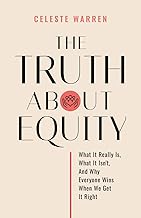
She is also the author of The Truth About Equity: What It Really Is, What It Isn’t, and Why Everyone Wins When We Get It Right. The book further advances her mission to make equity understandable, practical and beneficial for organizations and communities.
Purpose That Keeps Moving Forward
Warren’s next chapter is not driven simply by a desire to build a bigger brand or collect more awards. She is focused on legacy.
Through consulting, keynote speaking, leadership development, executive advising and writing, she wants to help leaders create workplaces where people can contribute, grow and succeed. She also hopes to prepare emerging generations to lead with courage, authenticity and responsibility.
“The Cost of Standing Still” reminds leaders that maintaining the status quo is not always the safest choice. Systems that once seemed effective may no longer serve the people or goals of a modern organization. Refusing to examine those systems can cost companies talent, trust, innovation and future growth.
Warren’s life and leadership demonstrate that progress is possible when people are willing to use their voices, question familiar practices and widen the path for those coming behind them.
Discover Celeste Warren’s consulting, speaking and leadership resources—and learn how your organization can begin moving forward—at www.CRWDiversity.com.