By Staff Writer
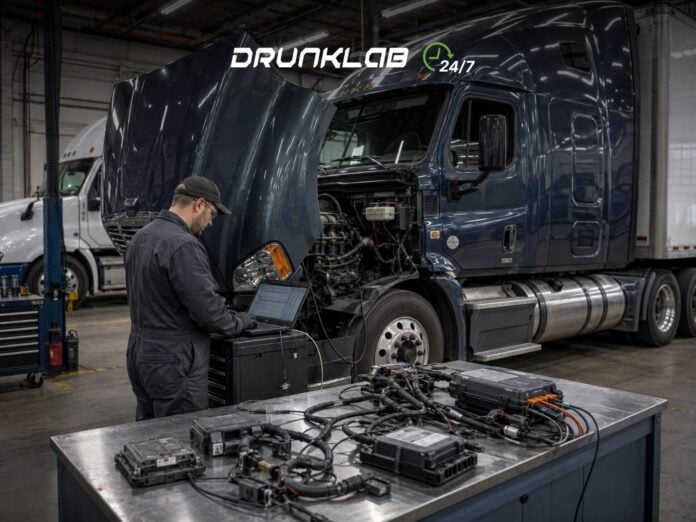
Sophisticated software has been built into platforms of modern commercial vehicles. Components such as engines, transmissions, and driveline systems still represent the mechanical systems in a truck. However, the functionality of these systems is determined, for the most part, by electronic control units (ECUs), embedded software, and high-speed communication networks. Through the CAN networks, all heavy-duty trucks can contain dozens of control modules that communicate with one another. These modules manage fuel injection, turbocharger operation, transmission shifting, braking systems, emissions control, dashboard functions, safety systems, and more. Because of this system integration, diagnostics of a modern truck involves much more than traditional mechanics. It involves knowledge of electronics and software systems.
From Mechanical Repairs to Digital Maintenance
Historically, focusing on the repair or replacement of mechanical components was the main responsibility of the technician. However, vehicle issues today are primarily due to software corruption, incorrect calibrations, communication failures between the ECUs, or failed module programming. For example, a truck may enter derate mode due to electronic logic instead of physical damage to the engine.
Accordingly, software maintenance has become integral to fleet management. At professional repair facilities, routine activities now include performing updates to calibrations, programming replacement ECUs, repairing and restoring damaged firmware, and configuring new modules.
Why ECU Programming Matters
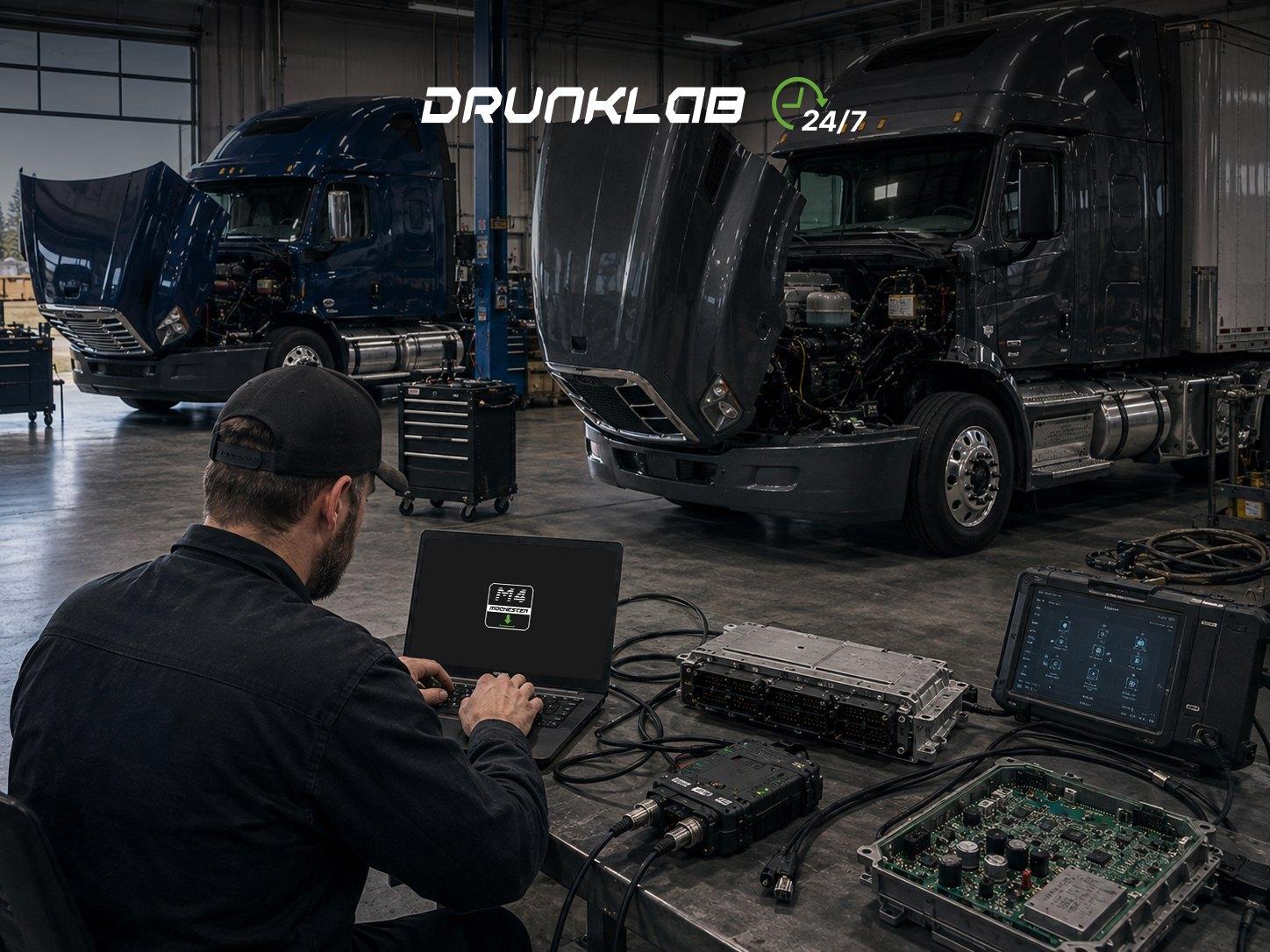
Technicians can perform several important tasks using ECU programming, including installing OEM software updates, configuring replacement control units, erasing corrupted memory, and programming communication links between vehicle subsystems. Proper ECU programming increases the reliability and overall performance of control units, and also decreases the downtime during diagnosis.
For fleet operators, minimizing downtime is often more valuable than reducing individual repair costs. Prompt and precise electronic repairs reduce the time required to return a vehicle to service while preventing needless replacement of components.
The Rise of Remote Diagnostics
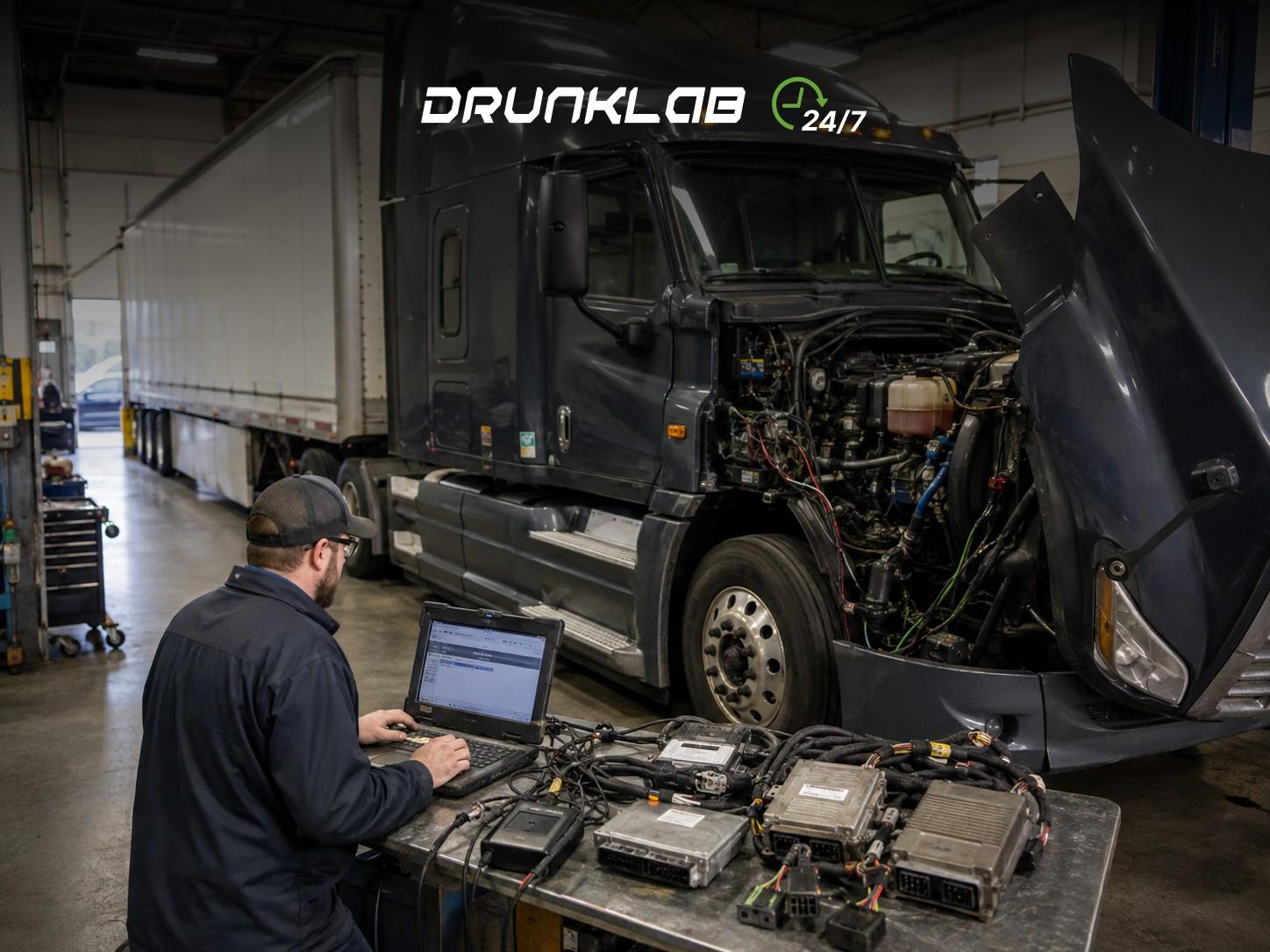
The Remote diagnostic technologies used to support commercial vehicles have evolved to such an extent that the need to remove ECUs and transport them to specialist laboratories has been eliminated. Diagnostic technicians are now able to complete many sophisticated tasks from their own facilities using secure software connections and approved diagnostic hardware. Remote programming saves on logistics and reduces downtime while enabling workshops to access specialized expertise that would otherwise be unavailable.
Artificial Intelligence Supports Technicians
Artificial intelligence is now more widely used for helping service professionals. AI can help by reviewing fault-code histories and identifying patterns of repetitive failures and can assist with prioritizing diagnostic steps. AI does not replace skilled technicians. Instead, AI enhances the efficiency of technicians by decreasing the time needed to determine what the possible root causes may be.
With technological improvements made possible by predictive maintenance, each fleet operation will focus on data analysis to proactively schedule repairs prior to the occurrence of any breakdowns or malfunctions.
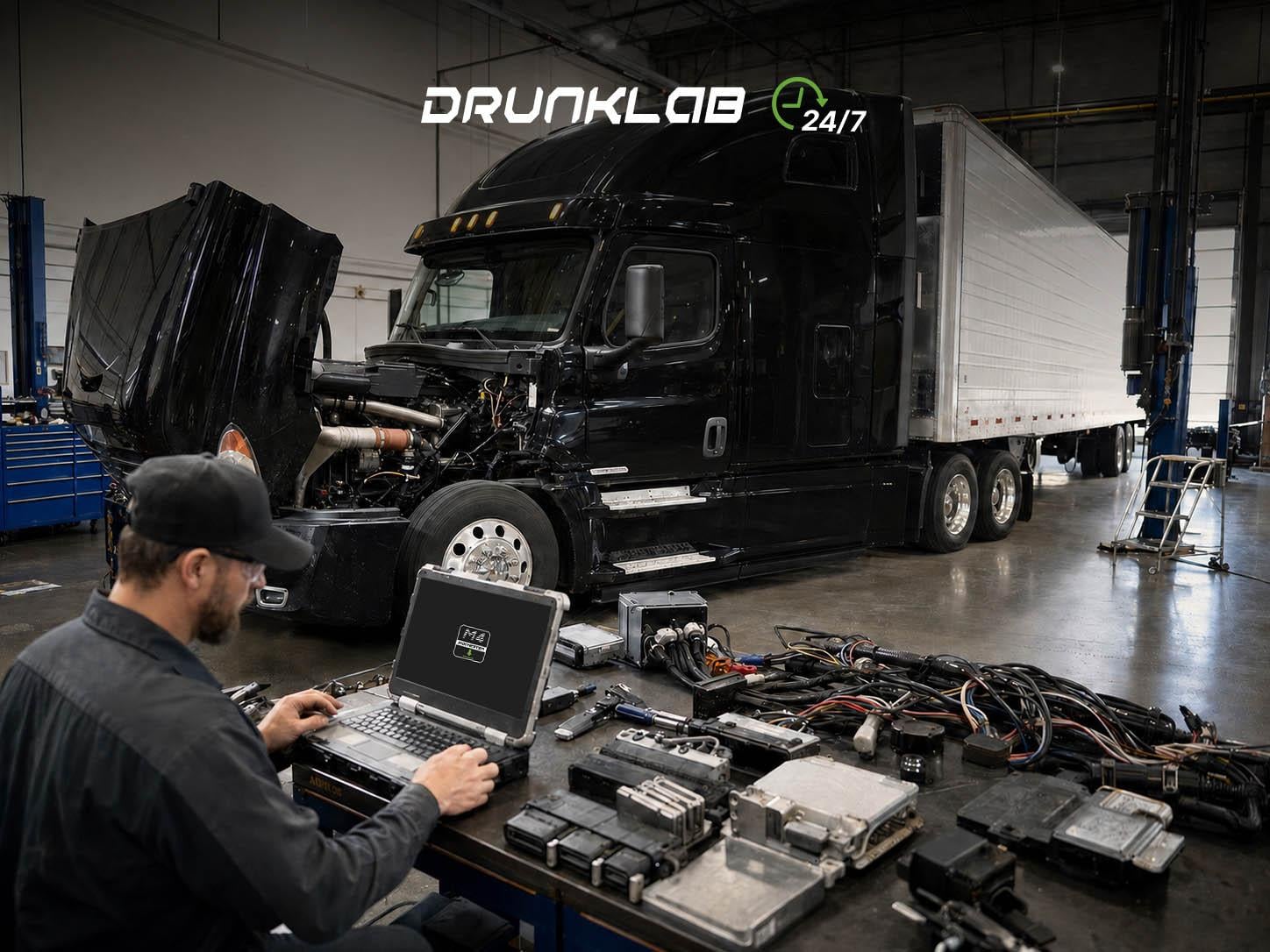
Electronic Systems Continue to Expand
Modern vehicles integrate engine control, emissions management, transmission logic, driver assistance systems, telematics, and fleet management into one connected ecosystem. Every software update can influence fuel economy, drivability, emissions performance, and overall reliability.
This trend means electronic knowledge will become even more valuable over the coming decade.
About DrunkLab
DrunkLab has specialized in commercial vehicle software engineering for more than 15 years. The company develops professional solutions for trucks, buses, construction equipment, agricultural machinery, and marine engines.
Its services include ECU programming, engine calibration, transmission programming, VIN cloning, ECU recovery, software configuration, and advanced solutions for SCR, DPF, and EGR systems. The company works with Volvo, Mack, Renault Trucks, Cummins, Detroit Diesel, PACCAR, Volvo Construction Equipment, and many other platforms used by fleets worldwide.
DrunkLab uses original software and remote technology along with its extensive experience with commercial vehicle electronics to assist workshops and fleet operators with difficult software-related problems while reducing the vehicle’s downtime.
Conclusion
The future of commercial transportation will be defined not only by new powertrains but also by increasingly sophisticated software. Mechanical expertise remains essential, yet electronic diagnostics, ECU programming, and software engineering have become equally important for maintaining modern fleets. Companies capable of combining practical repair experience with advanced electronic expertise will play a critical role in keeping commercial vehicles productive, reliable, and efficient. Given that software will continue to play an increasingly important role in controlling commercial vehicles, platforms like DrunkLab will be an invaluable partner for workshops and fleet operators dealing with this change.