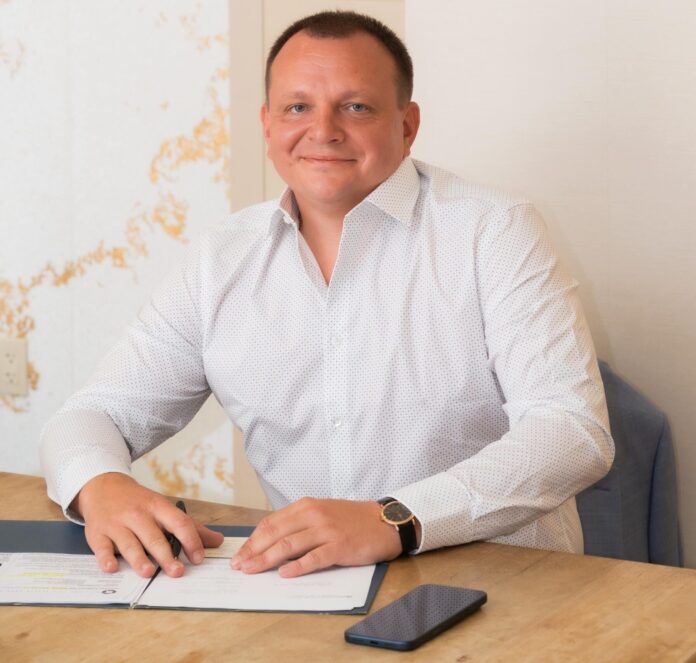
Author/Journalist: Jared Miller
In a financial landscape shaped by volatility, war, and structural transformation, leadership is measured not by rhetoric but by results. Kostiantyn Strashnenko, Founder and Director of Capital Finance and Top 100 Financial Services Leader 2024, has built a reputation for turning complex economic turbulence into structured opportunity. In this interview, he speaks candidly about his analytical approach, real business outcomes, and why data—not instinct—defines modern finance.
Journalist: You built your career inside Ukraine’s largest financial institutions before founding Capital Finance. What did that experience teach you?
Kostiantyn Strashnenko:
It taught me that traditional finance was too reactive. Many institutions analyzed risks only after losses appeared. By then, damage control was far more expensive than prevention.
During my time in large banking and investment environments, I worked on portfolios exceeding $1.2 billion in assets under analysis, which gave me insight into systemic risk patterns across banking, energy, construction, and industrial sectors. I saw that companies with strong analytics lost 25–40% less value during economic shocks compared to those relying on intuition.
That realization became the core philosophy behind Capital Finance.
Journalist: What exactly makes Capital Finance different from other consulting firms?
Strashnenko:
Most firms deliver static reports. We build dynamic financial systems that evolve with the company.
Since 2021, Capital Finance has worked with over 40 medium and large enterprises, covering sectors including manufacturing, logistics, real estate, and fintech. Across theseprojects, our strategies have helped clients:
We don’t just analyze businesses — we re-engineer how they think financially.
Journalist: Can you share a real case where your approach changed a company’s trajectory?
Strashnenko:
Certainly. One industrial manufacturer in central Ukraine was facing potential insolvency in 2022. Their debt load had increased by 65%, while revenue dropped 28% due to supply chain disruptions.
Our team implemented a three-step transformation:
Within 14 months, the company returned to profitability, increased revenue by 22%, and restored investor confidence. Instead of liquidation, they achieved sustainable recovery.
Journalist: You often speak about predictive risk models. How do they work in practice?
Strashnenko:
We built proprietary forecasting tools that simulate financial stress under different conditions — currency volatility, energy price shifts, labor shortages, and market contractions.
For one logistics company handling over 120,000 shipments per year, our model predicted a 15% margin decline due to fuel price volatility. By adjusting pricing and route planning in advance, the company preserved its margins and saved approximately $1.8 million in potential losses.
This is proactive finance — not reactive damage control.
Journalist: Beyond analytics, you emphasize governance. Why is that critical?
Strashnenko:
You can have brilliant models, but without governance they mean nothing.
We introduced a corporate governance framework now used by nine Ukrainian companies, integrating:
In one real estate development firm, this framework reduced financial discrepancies by 48% and improved credit ratings within two years — unlocking access to new investment capital.
Journalist: You were recognized as a Top 100 Financial Services Leader in 2024. What distinguished you from other nominees?
Strashnenko:
The award recognized measurable impact, not just expertise.
Among finalists, I was one of only 12 professionals whose work demonstrated both quantifiable business results and systemic industry influence. My nomination was supported bycase studies showing:
It validated that analytical leadership can reshape entire sectors, not just individual firms.
Journalist: You are also known as a mentor. What scale does that work reach?
Strashnenko:
Since 2022, I have mentored over 120 young financial professionals and entrepreneurs through workshops and advisory programs.
Many now work in banking, fintech, and corporate finance. Several have launched analytics-driven startups. My goal is to create a generation of leaders who think strategically, not opportunistically.
Journalist: How do you see Ukraine’s financial system evolving in the next decade?
Strashnenko:
I believe Ukraine will transition toward a data-first financial economy, similar to advanced markets in the EU and U.S.
Within five years, I expect:
Capital Finance aims to be a driving force in that transformation.
Journalists: What legacy do you want to leave?
Strashnenko:
I want to be remembered as someone who proved that smart analytics saves businesses, protects jobs, and strengthens economies.
If in ten years Ukrainian companies are globally competitive, financially resilient, and strategically sophisticated — and my work contributed to that — then I’ve succeeded.