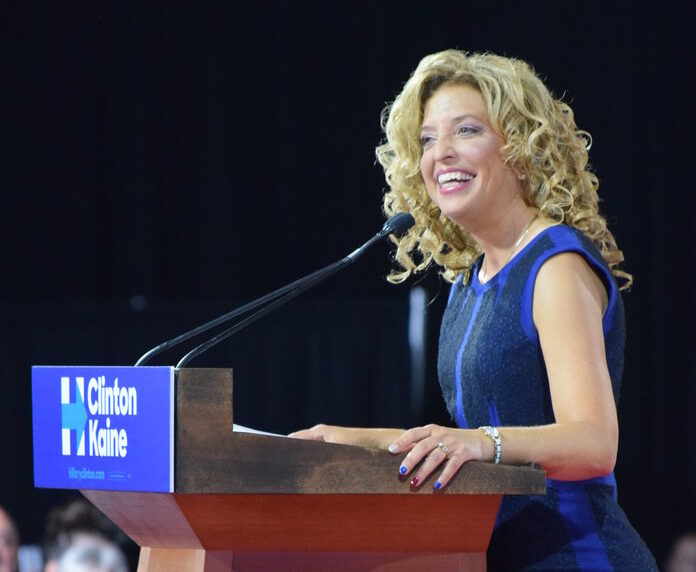
As political divisions deepen across party lines, Debbie Wasserman Schultz remains one of the most visible and active Democratic voices in the U.S. House of Representatives. Her work sits at the intersection of identity, policy, and political power. For nearly two decades, Debbie Wasserman Schultz has held a firm grip on her South Florida district while influencing national debates on healthcare, antisemitism, reproductive rights, and party direction.
In 2025, her dual identity as a Jewish-American lawmaker and a progressive Democrat puts her at the center of several of the most pressing conversations shaping the country. From internal party disputes to controversial votes, Debbie Wasserman Schultz plays a pivotal role in defining what it means to lead with both conviction and complexity in a divided Congress.
Debbie Wasserman Schultz Stands at the Crossroads of Cultural and Political Identity
Debbie Wasserman Schultz has never shied away from the role her cultural heritage plays in shaping her public service. As one of the most senior Jewish women in Congress, she has led numerous initiatives addressing antisemitism and religious discrimination. She co-founded the Congressional Jewish Caucus and remains one of its most vocal members, regularly speaking out against rising hate speech and anti-Israel rhetoric in public discourse.
At the same time, Debbie Wasserman Schultz has found herself navigating tension within her own party. Progressive members have challenged her stance on Israel, her support for military aid, and her condemnation of slogans and protests seen as hostile to Jewish communities. Despite this friction, she continues to maintain a principled stance grounded in her lifelong advocacy for civil rights and global human dignity.
A Moderate Voice in a Progressive Shift
While the Democratic Party continues to shift left on many issues, Debbie Wasserman Schultz has remained a relatively centrist figure. Her pragmatic approach has earned her leadership roles, including her current position as Chair of the House Democratic Steering and Policy Committee. This role gives her influence over committee assignments and internal policy priorities, making her a key player in shaping the Democratic agenda.
Critics from the progressive wing often accuse her of being too closely aligned with establishment politics. However, supporters argue that Debbie Wasserman Schultz plays a vital role in bridging ideological divides and keeping the party grounded in practical governance. She has consistently championed legislation that addresses healthcare access, genetic testing for cancer risk, and protections for survivors of domestic abuse.
Her leadership style reflects an understanding that building consensus is just as important as pushing bold reforms. In an age where political echo chambers are louder than ever, Debbie Wasserman Schultz aims to be a connector within the party and a voice of stability during moments of national upheaval.
Controversies Highlight the Challenge of Long-Term Power

Despite her achievements, Debbie Wasserman Schultz remains a controversial figure for many Americans. Her resignation as DNC chair in 2016 following the email leak scandal still lingers in the minds of progressives who felt sidelined during that election cycle. More recently, she has faced scrutiny over personal stock trades that some watchdogs argue conflict with her congressional duties, although no formal charges have been filed.
These issues have fueled criticism from the left and right alike, but they have not diminished her influence. In fact, Debbie Wasserman Schultz has only strengthened her hold on leadership roles and continues to win re-election in her Florida district with significant support.
Debbie Wasserman Schultz Embodies the Modern Political Balancing Act
As the country grapples with questions of identity, ideology, and governance, Debbie Wasserman Schultz embodies the modern balancing act required of national leaders. She represents a district filled with diversity, passion, and contrasting views, and she brings that complexity to her work on the national stage.
Whether standing against antisemitism, advocating for women’s healthcare, or navigating the growing divide within the Democratic Party, Debbie Wasserman Schultz continues to shape the future of American politics. Her ability to remain relevant, powerful, and authentic in the face of constant challenges is a testament to her strategic skill and unwavering belief in the role of public service.