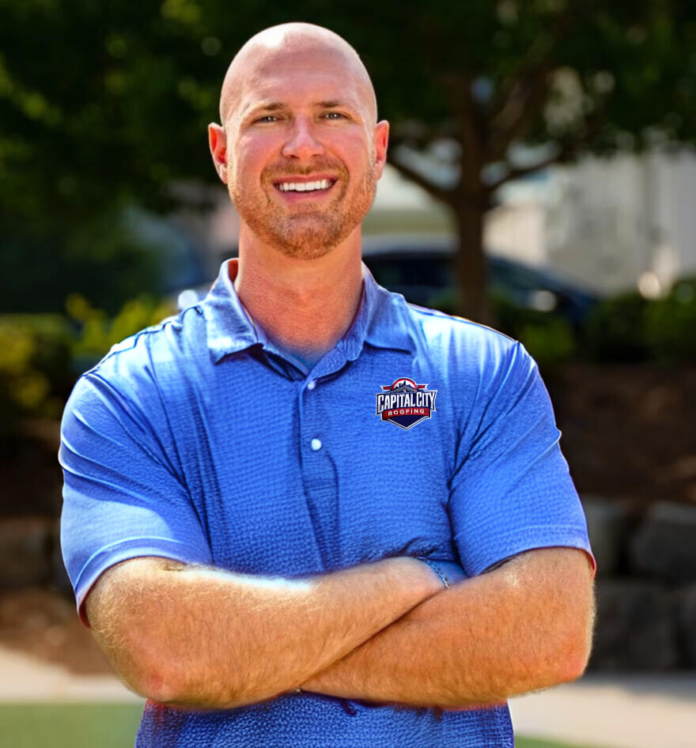
Brad Strawbridge founded Feed the Future Project nonprofit initiative focused on community impact and addressing food insecurity, integrating purpose-driven leadership with business success at Capital City Roofing, believing success measures not only by revenue but by how many lives you improve along the way.
Purpose-Driven Leadership
Brad Strawbridge, Founder and CEO of Capital City Roofing, founded Feed the Future Project nonprofit initiative focused on community impact and addressing food insecurity. This nonprofit work integrates purpose-driven leadership with business success.
Strawbridge is deeply committed to impact beyond business. Through community initiatives and nonprofit work, he believes success is measured not only by revenue but by how many lives you improve along the way.
This purpose-driven approach distinguishes Capital City Roofing from typical contractors focused purely on profit. The company pairs performance with purpose creating value for customers, teams, and communities simultaneously.
Feed the Future Project Mission
Feed the Future Project addresses food insecurity in communities where Capital City Roofing operates. Food insecurity affects millions of Americans including working families who struggle affording adequate nutrition.
The nonprofit initiative reflects Strawbridge’s values around community impact and giving back. As Capital City Roofing succeeds commercially, Feed the Future Project ensures that success translates into tangible community benefit.
Details about specific programs, partnerships, or impact metrics aren’t provided in available information. The nonprofit represents a relatively new initiative alongside Capital City Roofing’s recent founding.
Balancing Growth and Purpose
One challenge Strawbridge faced was balancing rapid growth with purpose. As business expanded, he made deliberate choices to align success with impact.
Launching nonprofit and community initiatives alongside commercial growth ensured the company remained values-driven not just revenue-driven. Many businesses wait until achieving success before starting philanthropic efforts.
Starting Feed the Future Project early in Capital City Roofing’s lifecycle demonstrates authentic commitment versus treating philanthropy as afterthought or public relations exercise.
Success Measurement Philosophy
Strawbridge’s philosophy is that success measures not only by revenue but by how many lives you improve. This expanded success definition goes beyond financial metrics to social impact.
Many business leaders focus exclusively on profit, growth, and shareholder value. Strawbridge adds community benefit as equal success measure alongside financial performance.
This philosophy shapes decisions at Capital City Roofing. Business strategies consider community impact not just profitability ensuring the company creates broad positive influence.
Values-Driven Company Building
Capital City Roofing operates as a values-driven company where principles guide decisions. Modern companies should create value for customers, teams, and communities simultaneously according to Strawbridge’s belief.
This values approach comes from leadership background and personal conviction. Strawbridge’s decade at Lowe’s and commercial roofing experience taught business fundamentals. Feed the Future Project adds a social mission dimension.
The combination of disciplined execution, real-world innovation, and values-driven leadership differentiates Strawbridge. Few entrepreneurs operate effectively across all three dimensions.
Community Initiative Integration
Beyond Feed the Future Project, Strawbridge mentions community initiatives plural suggesting multiple efforts. These initiatives integrate into Capital City Roofing’s identity rather than existing separately.
Employees seeing the company’s community commitment may feel prouder working there versus typical contractors lacking social mission. Values-driven culture can improve recruiting, retention, and motivation.
Customers appreciating community focus may prefer Capital City Roofing over competitors purely maximizing profit. Values alignment influences purchase decisions for some consumers.
Addressing Food Insecurity
Food insecurity represents a significant social problem. Many families earning income still struggle affording adequate food especially with inflation affecting grocery prices.
Children experiencing food insecurity face health, educational, and developmental challenges. Addressing food insecurity improves immediate circumstances while supporting long-term community wellbeing.
Feed the Future Project targets this specific need. Focus on food insecurity rather than general philanthropy suggests understanding of pressing community challenges.
Purpose Alongside Performance
Strawbridge intends to scale purposes alongside performance over next 2-5 years. Through nonprofit and community initiatives, he’s committed to ensuring growth translates into tangible community impact.
This parallel scaling approach means Feed the Future Project grows as Capital City Roofing expands. Community impact increases proportionally with business success rather than staying static.
Many successful businesses maintain small charitable giving programs regardless of growth. Strawbridge’s vision involves scaling philanthropy matching business expansion.
Building Modern Companies
Strawbridge’s story sits at the intersection of old-school execution and next-generation innovation. But it also includes values dimension through Feed the Future Project.
Modern companies in Strawbridge’s vision balance technology, efficiency, profit, and social responsibility. All elements work together rather than competing for resources or attention.
This integrated approach to building companies represents an emerging model especially among younger entrepreneurs who expect businesses solving social problems not just generating returns.
Southeast Expansion Impact
As Capital City Roofing expands into multi-market operation across Southeast, Feed the Future Project can expand similarly. More markets mean more communities benefiting from nonprofit initiatives.
Geographic expansion provides opportunities for increasing social impact. Established models in one market can replicate across regions creating broad positive influence.
Setting New Industry Standards
The goal is not just growing companies but helping set new standards for how modern businesses are built, led, and scaled in the next decade. This standard includes a social responsibility dimension.
The home services industry including roofing has a limited tradition of social enterprise. Most contractors focus purely on business operations without significant philanthropic components.
Strawbridge aims to redefine industry expectations where community impact becomes standard, not exceptional. Feed the Future Project demonstrates this redefinition.
Brad Strawbridge founded Feed the Future Project nonprofit addressing food insecurity while building Capital City Roofing to multi-million dollars in the first year, integrating purpose-driven leadership with business success. The CEO with Lowe’s management background believes success measures by how many lives improved not just revenue, plans scaling purpose alongside performance over next 2-5 years as company expands across Southeast creating tangible community impact through values-driven modern company model.

LinkedIn: https://www.linkedin.com/in/brad-strawbridge-75214615b/
Facebook: https://www.facebook.com/CapitalCityRoofing.net
Website: https://capitalcityroofing.net