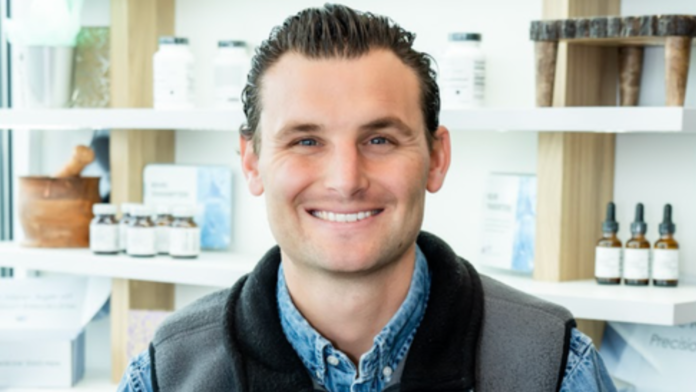
Plenty of founder stories begin with a breakthrough. Christian Stella’s begins with two failed exams.
After graduating from St. John’s University in 2016 with a Doctor of Pharmacy degree, Stella sat the New York compounding pharmacy board exam and the NAPLEX, the national licensing exam pharmacists must pass to practise. He failed both, according to a Digital Journal profile published in August 2026.
Six months of waiting
New York allows candidates to retake the compounding exam only once every six months, so Stella had no quick route back. He seriously considered leaving pharmacy altogether during that stretch, the profile reports, telling himself his degree could serve as a backup while he found something else.
When he retested, he passed. Looking back, Stella describes the setbacks as closer to a gift than a delay. They gave him an edge and a patience he does not think he would have built if success had come easily.
A family that ran pharmacies
The pressure was not abstract. Stella is the fourth generation of his family to earn a pharmacy degree. His grandfather built Stella’s Pharmacy into a neighbourhood fixture in Canarsie, Brooklyn, and his father later expanded the family business into long-term care alongside four retail pharmacies.

For someone raised in that world, failing the licensing exams threatened more than a career plan. It put a family tradition in question.
Patience, applied
Stella’s patience found a use a few years later. He and his co-founders saw the compounding pharmacy industry shifting towards telehealth faster than its infrastructure could keep up, and they chose to build that infrastructure themselves.
The result was Precision Medicine, formerly known as Precision Compounding Pharmacy, based in Bellmore, New York. The company describes itself as a 503A pharmacy that fills commercial, sterile and non-sterile prescriptions for telehealth companies, connecting to their systems through APIs and shipping directly to patients, sometimes under the partner’s own brand. It says it now operates fulfillment centres in New York, Florida and California.
What the setback taught
The Digital Journal profile says rapid growth, including raising venture capital, taught Stella more about leadership than about pharmacy itself. He worked with peer groups and his board to manage it.
His early failure offers a practical lesson for anyone facing a similar result:
- A failed exam measures one day. It does not measure a career.
- Waiting periods can be used. Six months is enough time to rebuild how you prepare.
- Setbacks change your pace. Founders who have failed tend to plan for things going wrong.
- Keep the backup honest. Considering another path is not the same as quitting.
The ambition now
Stella has spent nearly a decade in an industry he describes as a wild rollercoaster for patient access. His stated goal is for Precision Medicine to become the defining name in direct-to-consumer telehealth fulfillment, and he has described the aim of building what he calls a “true pharmacy unicorn.”
For a pharmacist who once wondered whether he would get to practise at all, the distance from those two exam results is the point of the story.