In 1986, inside a classroom at PS 97 in the Bronx, an eight-year-old girl sketched a solution to a simple childhood problem. She wanted to jump Double Dutch, but there was no one available to turn the ropes. So she imagined a machine that could do it for her.
That child was Dr. Tahira Reid Smith. Nearly four decades later, that sketch is becoming a reality.
Today, Reid Smith is an engineer, inventor, and founder of Jump Dreams, Inc., a company developing what is believed to be the world’s first automated Double Dutch jump rope system. Her story is not just one of innovation. It is a story of patience, faith, and the power of staying committed to a vision over time.
“I am not just trying to get press for the sake of press,” she says. “I am trying to get the world to see what’s possible when a child’s dream is given enough time, faith, and support.”
A Spark That Never Left
Reid Smith’s idea did not begin in a lab or a boardroom. It began in imagination.
As a third grader, she entered a school poster contest with her concept for a machine that could turn Double Dutch ropes automatically. She won first prize. Then, like many childhood ideas, it faded into the background.
But not forever.
Years later, as a mechanical engineering student at Rensselaer Polytechnic Institute, the idea resurfaced during a design class. She began sketching again, this time with technical precision. When her professor, renowned inventor Burt Swersey, reviewed her notebook, he wrote a single word in the margin: “Wow.”
“That one word changed my life,” Reid Smith recalls.
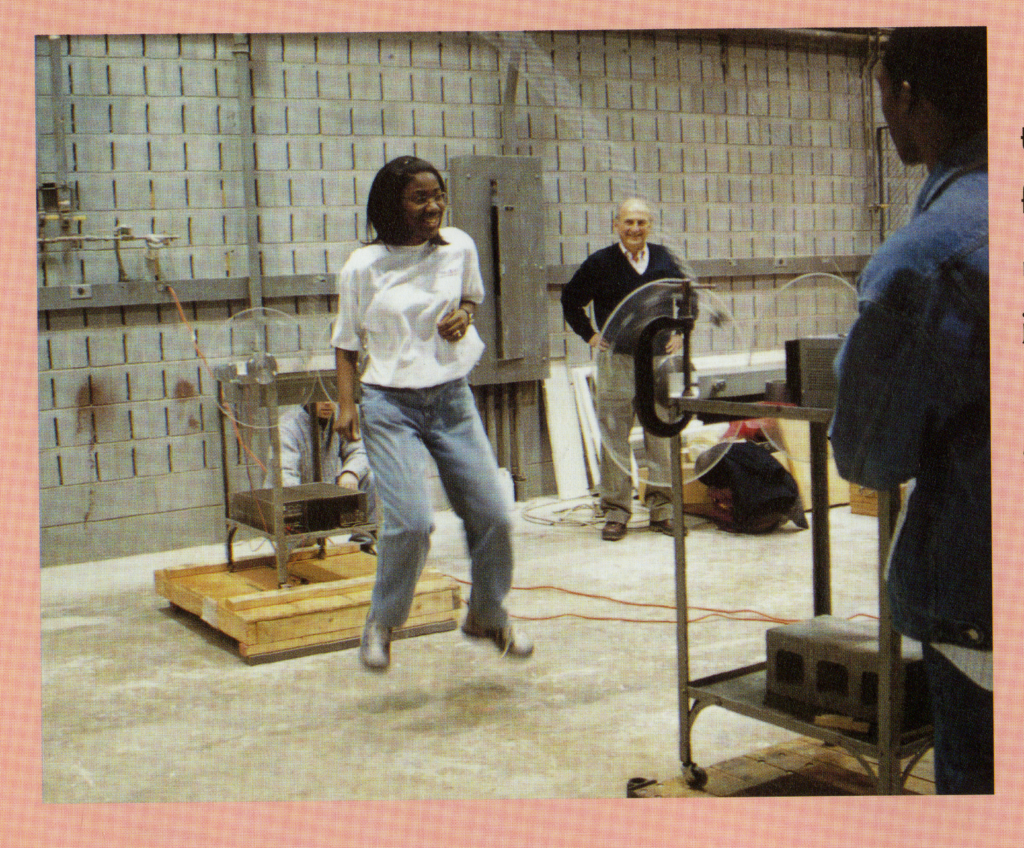
By 2000, she had built a working prototype. The invention drew national attention, landing features in major media outlets and earning her an invitation to demonstrate it at the Smithsonian’s National Museum of American History.
Then, unexpectedly, she stepped away.
The Long Game
At 22, Reid Smith made a decision that would delay her invention’s commercialization by more than two decades. Rather than rush into business unprepared, she chose to invest in her education.
She earned a master’s degree, a Ph.D. in design science, and built a distinguished academic career. Today, she is a full professor of mechanical engineering at Penn State and a Fellow of the American Society of Mechanical Engineers, an honor held by only a small percentage of engineers.
That choice was not a delay. It was preparation.
The journey also highlights a broader challenge in innovation. Women represent just 13 percent of inventors globally, and people of color account for less than 8 percent of U.S. patent holders. For Black women in engineering, the barriers are even more significant.
Reid Smith has navigated those barriers by combining technical excellence with resilience and a strong support network.
A Full-Circle Moment
In 2024, her story came full circle.
A photograph taken the day her college prototype first worked, showing Reid Smith jumping the ropes while her mentor looked on, was installed in the Smithsonian’s “Change Your Game” exhibit.
More than two decades after first demonstrating her invention there, she returned not as a student, but as part of the museum’s permanent narrative.
That same year, she founded Jump Dreams, Inc., formally launching the effort to bring her invention to market.
Building a New Category
Jump Dreams is not just a product. It represents a new category at the intersection of fitness, sports training, and cultural heritage.
Double Dutch, long a staple of Black communities and urban neighborhoods, is being reimagined through engineering. The automated system allows individuals to jump without needing two rope turners, opening the activity to new audiences, including fitness enthusiasts, athletes, schools, and rehabilitation programs.
Early interest has come from diverse sectors, including athletic trainers exploring its use for conditioning and community organizations eager to reintroduce the tradition in modern ways.
Building a hardware startup requires significant capital. Reid Smith has largely funded development herself, using personal savings, credit, and loans to move the project forward.
“I am literally walking by faith,” she says. “I don’t know where every dollar for the next phase will come from, but I refuse to let that stop me.”
Momentum Builds
In March 2026, Reid Smith showcased Jump Dreams at the Congressional Inventions Project’s Women’s History Month Innovation Showcase on Capitol Hill. The invention drew strong interest and engagement from attendees.
The company has filed a provisional patent and is working with design and manufacturing partners to prepare for production. A public launch is planned for 2027 at Penn State’s THON event, one of the largest student-run philanthropic events in the country.
At the same time, Reid Smith is expanding her platform through storytelling. Her upcoming children’s book, Tahira and the Double Dutch Dream, is designed to inspire young readers, especially girls, to see invention as something within their reach.
More Than a Product
What sets Reid Smith apart is not just her credentials. It is the depth and continuity of her story.
She is an inventor with a 40-year vision, an academic leader with technical authority, and an entrepreneur building a company rooted in culture and community. Her journey connects generations, from a Bronx classroom to Capitol Hill, from a childhood sketch to a market-ready innovation.
At its core, her message is clear. Dreams do not expire.
For Reid Smith, Jump Dreams is proof of that.
For those watching her journey, it is also a reminder that the ideas we carry as children, no matter how distant they may seem, can still become the innovations the world is waiting for.
Watch video: https://www.youtube.com/watch?v=2vfhkIG98nA&t=81s