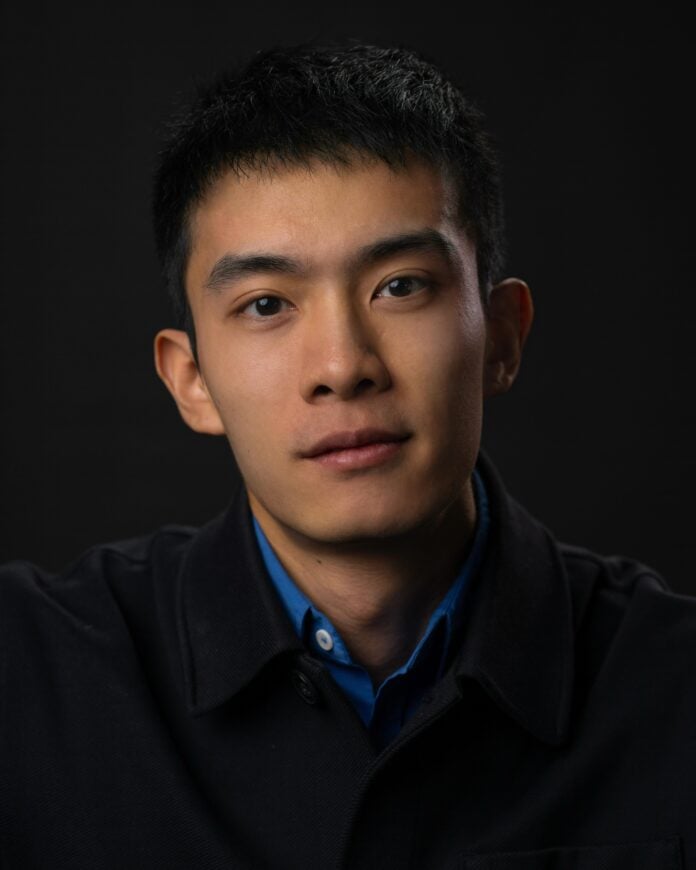
When Zefan Wang talks about film, he does not talk about prestige first. He talks about risk. Risk of choosing it. Risk of staying with it. Risk of letting it go.
That risk eventually placed him on an international stage. In 2025, Kubrick, Like I Love You earned the Student Academy Awards Bronze Medal in the Narrative Section and went on to draw attention across the festival circuit.
But the arc of his career is not defined by trophies. It is defined by persistence in the face of resistance.
Early Resistance and the Pull of the Image
Before Columbia, before international festivals, before film sets, there was painting. He first imagined a life in color and form, something that would persist into his later passion of filmmaking. “I have been painting from an early age and always wanted to be a painter as a kid, and that endeavor was called unrealistic and blocked several times throughout the years.”
The discouragement did not erase the instinct. It redirected it. During the intense preparation for Gaokao in high school, cinema emerged as both refuge and revelation. What began as a retreat from academic pressure gradually revealed itself as something more permanent.
Film combined image with motion, silence with sound, structure with spontaneity. It felt expansive, able to hold contradiction without forcing it into a tidy answer.
He enrolled at Nankai University, majoring in International Economy. The decision was sensible. The pull toward film remained constant. He ultimately chose to integrate both worlds. He directed theatre, acted in stage productions, and shot small projects whenever he could.
His breakthrough came in the form of a short documentary about a middle-aged dancing queen in Beijing’s painter village. The film was well received and, more importantly, it gave him confirmation that his voice could reach beyond the classroom. From that point forward, film was no longer a possibility. It was a commitment.
Over the years, he participated in the making of more than 20 short films. His early work moved between theatre and documentary before gradually transitioning into fiction. The Cao Yu Fellowship awarded to Variation of a Dire Night in 2018 reinforced what he had begun to understand. The desire to create was not something he could silence.
Cross-Cultural Tension as Creative Engine
Zefan’s academic background continues to shape his artistic concerns. Coming from international economics, he pays close attention to how structures shape people.
His films track individuals inside systems that feel orderly on the surface but unpredictable underneath. In XXX, Mon Amour (2024), awarded Best Film in the International Communication Program at the Chongqing Youth Film Festival, he examined cross-cultural misalignment. That tension between intention and perception continues to drive his narratives.
He treats misunderstanding as narrative fuel, drawn to the volatile space where intention and perception split, and where humor and hurt coexist.
Rather than isolating characters, his storytelling situates them within networks of interaction. Multiple perspectives coexist. Meaning shifts depending on who is watching. His films resist simplification. They acknowledge that in a globalized world, connection and confusion often operate simultaneously.
This fascination with layered systems informs both content and structure. Scenes unfold with careful design, yet they allow space for unpredictability. Characters collide with forces larger than themselves.
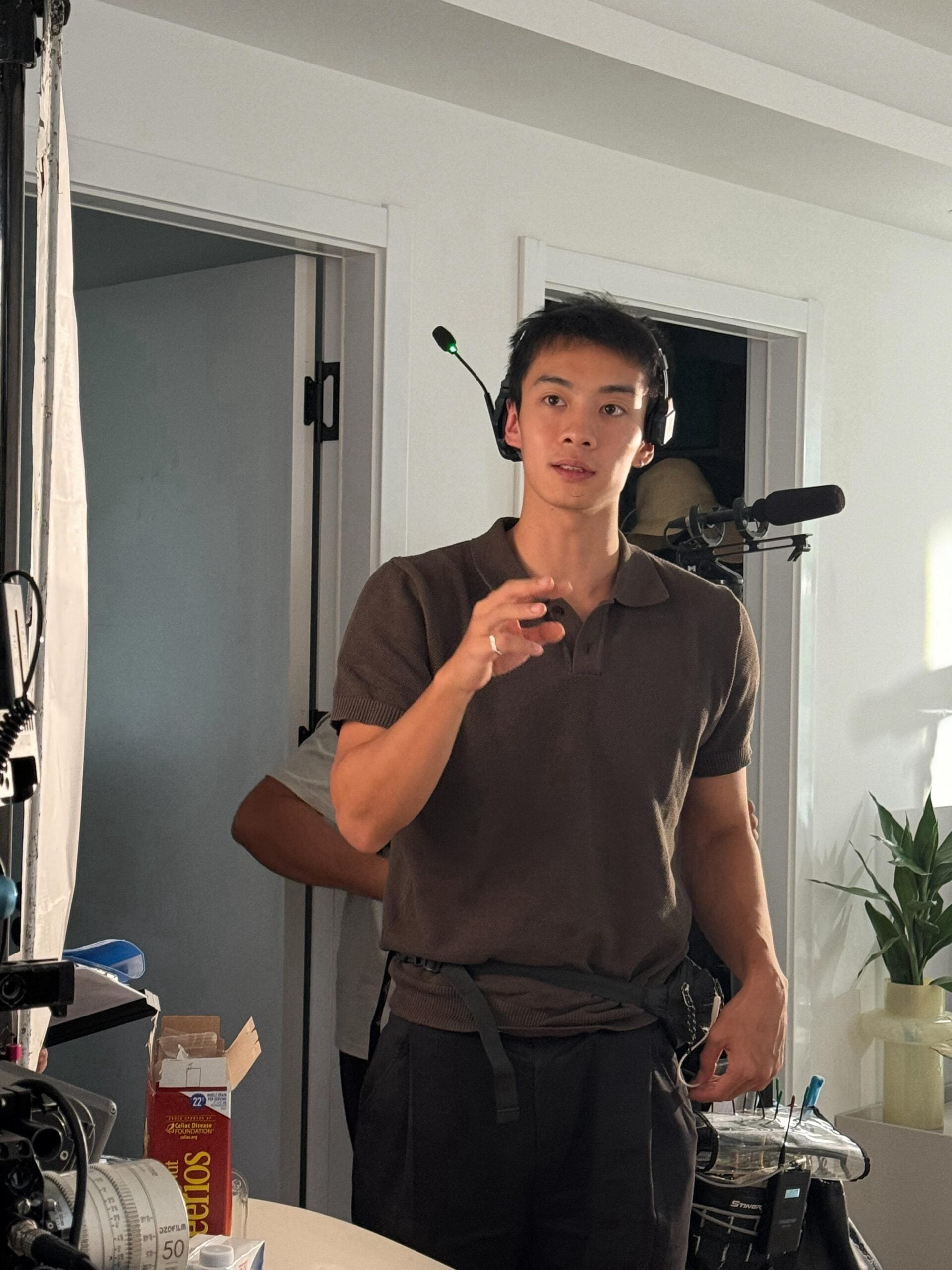
Director Zefan on the set of Kubrick, Like I Love You
Columbia and the Discipline of Making
Zefan’s formal training at Columbia University refined his practice without hardening it. He received a prestigious fellowship from his program in 2022 and completed his Film MFA in 2025. That same year, his time on set serving the producing team of Zhang Yimou’s Scare Out further placed him inside a high-level production environment.
Yet institutional milestones did not alter his core belief about filmmaking.
“I think a good filmmaker treats cinema as both rigor and play, but mostly play.”
In Kubrick, Like I Love You, Zefan builds the film on a strict underlying structure, yet each section contains clear signs of improvisation — from the use of documentary footage of everyday urban life in China to spontaneous performances by the actors.
For Zefan, seriousness does not require solemnity. Structure does not exclude experimentation. He is drawn to filmmakers who build formal systems only to disrupt them, creating rhythm from apparent instability.
Structure matters to him, but so does surprise. He sets the frame, then stays open to the unexpected turn that was never on the page. This friction between control and spontaneity generates energy. It keeps the work alive.
He often emphasizes that vitality during production translates to vitality on screen. A film made under rigid calculation feels different from one made with engagement and curiosity. For Zefan, discipline matters, but play is essential.
Recognition and the Art of Letting Go
When Kubrick, Like I Love You began its 2025 screenings, the accolades came swiftly. The film secured the Student Academy Awards Bronze Medal and additional recognition from FIRST and the Hangzhou Youth Image Award. The film’s reception confirmed his arrival on an international stage.
Beyond the recognition, he felt something more personal: the shift from control to release.
“Making a film is like raising a kid. You can give it all the nurture and attention you have, but once it’s out in the world, they are on their own. When a film is released, it no longer belongs to the filmmaker.”
He felt it firsthand when the audience’s responses took the film in directions he had not foreseen. Laughter surfaced in unexpected moments. Interpretations diverged from intention. Emotional reactions varied from one screening to the next.
“It’s still MY kid, but what they do, how they are received by the rest of the society, I can hardly interfere – they are their own person now. Letting go is a heart-stopping yet blissful feeling.”
The lesson reshaped his relationship to authorship. Control governs production. Release requires acceptance. Once a film enters public space, it begins a life independent of its maker.
What Comes Next
Now developing his first feature, Zefan remains focused on relevance rather than scale alone. He continues his exploration of memory, perception, and cultural misalignment, themes that have already shaped much of his short-form work. His ambition is direct.
“I want to make films that are relevant to the world we live in, that bring different perspectives into narrowly-interpreted topics and open up minds.”
His work continues to examine complexity without flattening it. He constructs frameworks and then allows them to bend. He invests deeply in the making, then releases the result without clinging to it.
About the Author
Joz Zuber is a culture critic and essayist covering international film trends. His writing explores how creative voices are transforming storytelling into a global conversation.