The Little Schools are a group of preschools founded by Holly Gold, where early education unfolds through a nature-integrated “indoor:outdoor mixed-age” model.
Drawing from Montessori, Reggio Emilia, Waldorf, and other educational philosophies, The Little School Approach to Early Childhood Education brings these ideas together through a social enterprise lens to create an environment that values autonomy, empathy, and community while giving children the space to grow into who they are, not just what they can do.
Founded in 2005, The Little Schools now includes two locations in Rockridge and one in Berkeley, serving children from 18 months to five years old. Each school reflects its neighborhood, while sharing the same underlying belief: children learn best by doing.
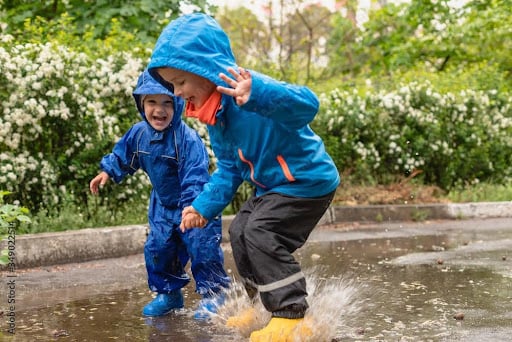
Step inside one of the classrooms and one won’t see children sitting still for long. They move between indoor and outdoor spaces, gravitating toward writing tables, block areas, gardens, or other outdoor areas. The rooms are bright and open, designed to let curiosity lead. Everything, from raindrops to puddles to gardens to airplanes, becomes a subject. When kids are interested, that’s where the learning lives.
The cohesive philosophy is practiced in mixed-age classrooms, where children learn alongside peers at different developmental stages. “It is one of the main defining aspects of The Little School Approach,” explains the founder. “No walls or doorways separate siblings, neighbors, teachers, parents, and community members. We are one.”
In one corner, a younger child watches an older one carefully pour water into a planter. Minutes later, they try it themselves. Moments like these build confidence, patience, and trust, which are skills that don’t arrive through instruction alone.
This setup is supported by research from Yale, which shows that play-based learning in early childhood, such as make-believe scenarios, significantly boosts school readiness by strengthening language, counting, fine motor, and social-emotional skills.
Within the methodology, learning begins with seeing the child first. Rather than moving students through a fixed path, educators observe how each child explores and connects through free play and organic learning. “We look at each child as an individual with unique talents and interests,” Holly Gold shares.
Another guiding idea is the importance of listening to children. Rather than teachers or administrators directing every thought or outcome, adults observe, listen, and respond through ongoing back-and-forth communication. “That’s not only how children learn. It’s how we all learn,” she further explains. This exchange respects children as active participants in their own learning.
Nature plays a central role. The outdoors is not a break from learning; it is a part of it. Trees, gardens, fresh air, and even rainy weather are treated as tools for discovery. When children hear birds, feel mud between their fingers, or notice how plants change with the seasons, they begin to understand their place in the world. Their learning becomes physical, emotional, and social all at once.
Contrary to common misperception, this open-ended play is the path to reading, writing, math, and all the other skills that children need. The Gesell Program shares that unstructured outdoor play invites the kinds of natural, open-ended exploration children are drawn to, from building forts to following their own paths, and that these self-directed experiences help them engage physically and socially while supporting the learning processes young children use to make sense of the world.
Community extends beyond the classroom. Acts of kindness, environmental care, and shared contributions are a part of daily life. Children help their friends, share their interests and expertise, and follow their natural desire to help. Parents are part of this approach as well. They are welcomed into the school community and invited to share their skills and interests.
Behind this environment is a structure that places equal care on the adults who hold it together. Teachers are respected and supported, and are encouraged to bring their full selves into the classroom. Their interests, backgrounds, experiences, and cultures are seen as assets, not distractions. When teachers feel secure and valued, they can be fully present. That’s when joy shows up in the classroom.
Leadership is a team effort. Decision-making and responsibility are shared among the management team rather than resting solely on one person. This is critical in the education field, where the stresses of leadership can be immense. The result is a collaborative culture in which educators support one another, and children benefit from consistency and care.
The unique school environment enables children to progress emotionally, socially, and academically. Holly Gold’s mission is to extend The Little School Approach beyond her own schools so that thriving minds can meet environments that invite learning and make every child feel valued and cherished.